Catholic homemaking · Food · Homemaking · Mary Mary and Martha · My world

Serving sizes, serving less and eating better


Jan Steen — Wirtshausgarten

Recently I have been reading “The Omnivore’s Dilemma” by  Michael Pollan.   At the moment I am about half way through, but it has been expanding and reinforcing my growing concern about food.  Not just what and how much we eat, but also how the actions we take as individuals in acquiring our food shape and change the world around us.  It has also given us our latest running joke.  “hey, guess what you’re eating”  — “CORN”.  It will eventually get old, but we will run it into the ground and stomp on it a few times before we give it up.   But back to diner. 

Gestational diabetes has been the worst part of my last two pregnancies, but it has also been positive in helping me focus on two important facts.  I need to eat better and I need to exercise more.   These facts were drilled how when I met with the nutritional councilor who talked about managing the carbohydrates I eat and balancing my menus for better nutrition.  The other item she highlighted was serving size.  Portion control is important.  Not just to my waistline, but to the family budget as well.  

Rethinking serving sizes for health: Portions have gotten larger over the past 20 years.  To see this in a compelling way check out Portion Distortion from the National Heart, Lung and Blood Institute.  (They also have a nice menu tool  where you can input your menu and see a breakdown of the calories, fat and carbohydrates. )   I know as I have gotten older I have seen this on my own plate.  I have allowed myself to be tricked into the idea that  more is better with regards to food, but that is just not true.  More is unhealthy.  The most expensive calories you buy are the ones that you over eat.  They cost money to purchase, time to store and cook, and money down the road dealing with health problems, they cost time to burn off, and they hurt your quality of life.  They are not a good deal.

Reason dictates that children need less food than adults, teens need more, older adults need less, but when I look at most serving suggestions (including those on packages and in reciepies) there is one serving size.   Menu recommendations for children usually reduce the number of servings, but this doesn’t work so well when I am cooking for the whole family.  So instead of changing the number of servings I am changing the portion size.

My typical family diner serves two adults (one serving each), one teen (1.5 servings), one older child (1 serving) , two younger children (.75 servings each)  and a toddler (.5 serving).  So basically I need 6.5 servings for the family for breakfast and dinner and 4 servings for lunch and snacks and box lunches for 2.5 plus “on the go” snacks for 2.5 serving.   But these can not be the bloated serving sizes that have crept onto our dinner plates, especially on the higher calorie items.  I will admit my visual judgment on what a serving is isn’t so great.  I need to measure and weigh items so that I can train myself to better judge what a serving is.  The Clevenland Clinic has a good resource for determining serving sizes.  I have a small kitchen scale and measuring cups and that pretty much lets me see what a serving size really is.  One of the fun things I did with the children we to take their favorite breakfast cereal and measure out one serving.  It was significantly less than what they had  been pouring out for themselves when they had the chance.  

Increased serving sizes leads to waste: When I cook too much it is almost guaranteed that at least some of it will go to waste.   Studies have shown that children under five won’t on their own eat more no matter how much you put in front  of them.  They stop eating when they are full.  But children older than five will eat more if there is more in front of them — to a point.  Too much food served up means food that is brought to the kitchen that need to be tossed.  Leftovers are great for boxed lunches especially, but more than one or possibly two days worth is a complete waste.   It will sit in the refrigerator until it resembles some misbegotten science experiment and then be tossed.  The second most expensive calories that you buy are the ones you don’t eat.

The sweet things in life: We are not machines.  We don’t just consume our food for energy.  We have a complex relationship with food, it is part of our culture, our family life and a real pleasure.  Or at least it should be.  Fast food, eaten quickly, on the go and alone doesn’t have anywhere near the same satisfaction as a well cooked meal, eaten with friends and family around the dinner table while talking over the days events.   Likewise we can’t eat ourselves into happiness.  While we might enjoy a piece of chocolate cake are we really going to enjoy a huge piece more than a small severing?  What is better, the small piece savored slowly or the huge piece eaten quickly?   A friend of mine once said, “With thing that you eat just for the taste just a taste should do.”  Smaller servings, prepared carefully and served in pleasant surrounds have a satisfaction that super-sized bloated servings just can’t match.   Taking the time to make food special has the double benefit of making less food more satisfying.

Homemaking · Mary Mary and Martha · My world

Catholic Homemaking


One of the recurring themes on this blog has been Catholic Homemaking.  That is a natural reflection of who I am, this blog is a journal of sorts and an outlet for my rather overactive brain to explore things that are important to me.  My husband and I were joking the other day about what a husband wants from a wife, the cliché sex, cooking, cleaning and rearing children was tossed out and we both laughed.   I suppose it is the flip side of the idea that women want to marry someone who will be a good provider and a good father.  Stereo types, not the whole store, but still relevant in a sense.  

A husband and wife are the ultimate sacramental partnership.  Together they guide their household.  Someone has to do the cooking, cleaning, changing diapers, educating the children, handling the bills and the shopping, bringing home the paycheck or running the business, both partners need security and intimacy.  How exactly the day to day work of living breaks down from couple to couple is entirely up to them.  I certainly don’t have the answers for everyone — actually I am pretty sure there is no one single answer but I have noticed that people tend to fall into certain groups.  The duel income families, the ultra-traditional families, the two-very-independent partners families all seem to have a great deal of trouble relating to one another.  Every family has decided on its own prioities and it can be difficult to respect the point of view of others when their priorities are far off from your own.  

I would hope that anyone reading this who would flinch at the fact that I often write from a more traditional point of view would realize that this is a reflection of choices that my husband and I made long ago and are very happy with.  We have chosen a life style that reflects our priorities and tastes.  I certainly wouldn’t say that anyone should agree with me or that if they don’t they are making some grand mistake.   And I am sorry, trying to post comments with negative critics on my faith or life style choices are not going to convince me to change my faith or any other aspect of my life.  

So I write always from my own perspective.  I am Roman Catholic, I am primarily a homemaker, I homeschool four of my children, I have a little cottage business, I keep this blog, I am crazy about my husband and very blessed by my children.   Most of what I write is for me.  I write to help organize my thoughts, improve my life, record where I have been and occasionally rant about things in the culture around me.  I hope you enjoy your visit here.


Homemaking · Mary Mary and Martha · My world · Simplicity · Summer Fling

The Simple Summer Fling

After getting horrible side tracked the last week.  I am starting my Simple Summer Fling: One small step at a time.  It offically begins on Monday,  June 23rd.

The goal to reorganize 30 small areas of my house over the next 6 weeks.

The important points:

One — This is summer I don’t want to get bogged down reorganizing the entire kitchen in one day.

Small— one shelf, one drawer, half a closet, the top of the entertainment center.  Something that can be tackled and done in less than half an hour.

Consistant — A little each day will go a long way.

Thoughtful — I want to be sure to assess what the area’s problem is before I take it on.

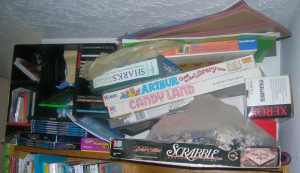
Accountability — Yes, I am going to be posting before and after shots for this one.

That is it.  As with the trash-bag challenge feel free to adapt this to your own situation and if you want to join in send me a link to your blog or leave a comment here.

Blogs I Know · Homemaking · Mary Mary and Martha · Simplicity · Simply Lovely Fairs

Simply Lovely Spring 2008: The Splendor of Spring

Calling all you brilliant Simply Lovely writers out there!

This week I will be hosting the next “Simply Lovely Fair”   the topic is “Simply Lovely Picnics”. 

I will put off posting submissiongs until Saturday  the 31st  to give more people a chance to get their submissions to me. 

If you can leave your link in the comments or you can email them to me.

Homemaking · Mary Mary and Martha · My world · Simplicity

Getting clothing under control


The Young Seamstress by Heinrich Hirt

You may have noticed that in my laundry articles I have referred a few times to my clothing lists without going into detail about the lists themselves.   This is a response to the inquiries I have received about the lists.  It explains what the list is and how it works, I have provided my lists as an example and explained the process of developing the list in case you want to create your own.

The clothing list was developed using several different lists and by observing my own family’s needs.  The philosophy behind the list is simple: there is a minimum amount of clothing that my children need.  Having more than that doesn’t improve their quality of life, and managing an excess is a burden for our family.   The list serves two very important purposes for me.  First it gives me a frame work to enable me to see when we have too much.  The second is that it makes planning of my children’s clothing needs a breeze.

Creating my first list:
When I gave birth to my fifth child my mother and father-in-law stayed at our home with the other children.  My mother-in-law made the observation that we own too many clothes.  And we did.  Between school uniforms for my oldest, the endless boxes and bags gifted to us by friends and family and our own purchases for the children our closets were stuffed, drawers overflowing and the laundry baskets bursting at the seems.  The laundry cycle was broken, mostly because it was overloaded.  I had to do something.  I was quick to admit that my mother-in-law was correct and that a large part of the laundry issue was the amount of clothing we owned, but I really didn’t feel that I had a sense of what to do about it.

We had just finished purchasing school uniforms for my oldest and as I looked at the list I had a small inspiration.  If I could make a list for uniforms for school surely I could apply that basic concept to clothing as a whole.  Then came the realization that somewhere online a list like what I wanted probably existed.  But I couldn’t find one.  The closest I came was a list of the bare necessities for children in foster care or the lists for children attending boarding school or camp.  But these all helped me figure out what was needed.

I came up with the following items:

Casual clothing:
Onesie
Romper/ sleeper
Tops
T-shirt
Short Sleeve Shirt
Long sleeve shirt
Turtle Neck/ Sweat shirt
Sweater/Cardigan
Skort/Skirts/Jumper
leggings
Shorts
Jeans
pants

Sunday Best:
Dress
Dress shirt
Slacks
Jacket
Tie
Dress coat

Nice dress up:
Dress or nice outfit
Nice shirt
Slacks

Foundations:
socks
dress socks
tights
nylons
Underwear/panties
Bra
Slip
Bloomers
Undershirt
Pajamas
Robe

Weather Wear:
Rain coat
light weight Jacket

Warm coat
winter Hat
Gloves/mittens
Scarf
sun hat

Sports and athletics:
t-shirt
athletic shorts
Swimsuit
Sweat pants
Sweat shirt
As needed  for sports or lessons (might include martial arts uniform, ballet leotard, or sports uniform)

Shoes
casual shoes
sandals
Hiking boots
Rain boots
Winter boots
dress shoes
athletic shoes
slippers


I wanted to be sure that I covered the basic needs of my children for the full year.  This base list covers all ages.  From this list for any individual child I knock out those things that don’t apply to them, then I work on the quantities.

Figuring out the quantities:
Once I had the master list the next thing to consider was the laundry cycle.  Typically the longest an item will be in my laundry cycle is four days.  An item worn the day I wash the type of clothing the item is will be washed again within four days.  For example: Hannah wears her favorite pink top on Tuesday.  Tuesday I am washing light weight light-colored clothing the top she is wearing belongs in so it isn’t in that load.  If Hannah puts her top in the laundry Tuesday night  I won’t wash light-colored lights again until Thursday or Friday  and it will be folded and in her drawer again by Friday or Saturday.

Every family’s wash cycle is different.  It is determined by the type of clothing your family wear, the number of people in your family, your load size and the time you spend on laundry.  The larger your family the more laundry you have, but the less time it takes to accumulate a full load of any particular type.   The more consistent the type of clothing your family wears the less time between that type of load.   If you have four boys who live in jeans you might find you wash denim every two days and whites once a week, in this case you would need three jeans for each boy but they would need seven pairs of socks and underwear

Your cycle will be the major determining factor in how many items you need of each type.  Basically you need clothing equal to the number of days between washes plus one. If you wash everything everyday you need two changes of clothing, but if you wash each load once a week you need eight.   Since I wash almost everything in four days my family has five days worth of clothing.   Other things you might consider are: Do you have multiple clothing changes per day (infants?)  Are you consistent in your laundry cycle?  Do you have religious or personal times that you can’t do laundry during?  Do you wash some loads more frequently than others?

An example of adding quantities:
Let me show you an example of how I go from the general list to a specific list for a child.  Let’s look at Hannah.   She is a six year old girl who loves pink and frills and takes ballet and swim lessons.

First, I knock out all the items that aren’t appropriate for her age and gender.  Gone are the baby things, the nylons for a teen girl, the shirt and tie for the boy.  I add in the leotard, tights and slippers for ballet.

Second, I go through and fill in the things that we just need one of,  dress clothing, coats and shoes among others.

Third, I figure five days clothing on some things, like underwear, which are worn each day.  Other items I split the five days over two or more seasonal options, for instance 2-3 long sleeve shirts plus 2-3 turtle necks or swear shirts.  For pajamas, at this age I default to two as we wear them more than one night in a row.   I also include notes on some items, like the note that at least one pair of tights be nice for mass.

Finally, I go in and finish the list by adding two slips, three to four bloomers and two pair of dance tights (so we won’t be scrambling if one pair has a run on dance lesson day) The final result can be seen below:

Casual clothing:
Tops  2-3
Short Sleeve Shirt 2-3
Long sleeve shirt 2-3
Turtle Neck/ Sweat shirt 2-3
Sweater/Cardigan  1
Skort/Skirts/Jumper 2-3 (per season)
leggings 2-3
Shorts  2-3
Jeans   2
Pants 2-3

Sunday Best:
Dress   1
Dress coat 1

Nice dress up:
Dress or nice outfit 1

Foundations:
socks  2-3
tights  2-3, one day pair for mass
Underwear/panties – 5
Slip  2-3
Bloomers 3-4
Undershirt – 5
Pajamas 2
Robe 1
Slippers 1

Weather Wear:
Rain coat 1
light weight Jacket 1
Warm coat 1
winter Hat 1
Gloves/mittens 1
Scarf 1
sun hat 1

Sports and athletics:
t-shirt 2
athletic shorts 2
Swimsuit 1
Sweat pants 1
Sweat shirt 1
leotard  1
tights 2
ballet slippers 1

Shoes
casual shoes 1
sandals 1
Hiking boots 1
Rain boots 1
Winter boots 1
dress shoes 1
athletic shoes 1

Each age has special consideration.  Babies go through more clothing a day and some mothers wash their clothing separately.  Toddlers and pre-schools might have more nighttime accidents and need extra changes of pajamas.  School age children tend to need an extra pair of basics (jeans, shorts etc.) because of their tendency to get messy outside.  Teens may have more definite taste considerations, work or school uniforms and or hand washables.    You know your family and nothing can substitute for your own judgment, but hopefully this creates a starting place for you if you are interested in the clothing inventory list system.

Homemaking · Mary Mary and Martha · Simplicity

Laundry part three


Francisco De Zurbar


This is the third of the laundry series parts one and two are:
Simply Lovely Laundry

Laundry – The System


Washing, drying, ironing and all that sort of thing

This article is a continuation of my other laundry articles: Simply Lovely Laundry and Laundry – The System.

In those articles I explained that the root struggles of laundry in our household.  Large families generate more laundry, but we had complicated our problem by having an excess of clothing and linens.  To solve this problem I created a lists of clothing for our family and lists of linens, towels and other washables.  By eliminating and limiting the amount of clothing we own I simplify the laundry. 

To manage dirty clothes we have hampers in dressing areas that are sorted into hampers in the laundry room before they are washed.  We have five baskets, four tall ones and one small one.  The tall baskets sort the laundry into whites, light colors, heavy/dark colors and towels.  The small basket holds the kitchen towels.  This makes it easy to keep the loads sorted and to see what needs washed “right now”.   Even the little kids can handle this sort of sorting system. 

Washing:
The machines: we invested in the most energy efficient and high capacity washer and dryer we could afford.  Not a matching set,  because we found that often one item of a set was rated far higher than they other, so they don’t match but after doing the research on the models available to us and within our budget we ended up with what we have.  When we bought our first energy efficient washer I noticed a real drop in our electric bill.  I think it paid for itself in less than two years.  I am not going to recommend a particular brand here because by the time you read this something else will be better, but we have Whirlpool washer and Kenmore dryer.  If you are in the market for replacing your washer or dryer do the research to find an energy efficient, quality machine. 

Each of our tall baskets hold about one and a half loads of laundry.  To keep absolutely on top of the laundry I do two to three loads of laundry a day.  At one point I would be behind if I wasn’t doing three loads a day.    But I instituted some common sense practices that helped me greatly.

Hang up bath towels after they are used.  Towels used to dry off a clean body can in fact be used again.  The same goes with the pool towel.  As long as it is clean hang it up and let it dry, use it again.  Here is the math.  I put 10 bath towels in a load.  If each person uses a bath towel one a day and we go swimming twice a week that is 63 towels a week and 6.5 loads of laundry.  If each person hangs up their towel and uses it twice it cuts that in half.  

Change bedding all on the same day: I find it easier to have one, big, linen washing day then to have sheets dribbling in with the regular laundry.

Rules for lovely daughters:  You will not change your clothing three times a day not even twice.  If you are playing dress up you will put your clothing back on when you are done.  Yes, that means the same clothing  you had on before.  You will not eat, drink or do arts and crafts in your dress up clothing (exceptions may be made for tea parties).  

Rules for dashing sons: Please do not roll in mud, dirt or dirty leaves.  Do not throw mud, dirt or anything else at your siblings.  Do not hose down the dog in order to play “sprinkler” dog.  I don’t care that you were playing farm and got to be the pig, the mud rule still applies.  If you start getting hot bring your jacket or sweatshirt inside, please don’t leave it outdoors, drop it in the dirt or mud or put it on the dog.

Rules for all children: If you dig through your drawer to find a favorite item put everything back, in no circumstances should you leave clothing on the floor.  Hang up your bath towel and wash cloth.  Wear an apron when cooking and a craft smock for painting.  Use your napkin not your pants or shirt.  Use a tissue not your sleeve. 

Detergents:  
I follow the manufacture’s instructions with my front loader and use the recommended detergent.  Some people don’t and their laundry comes out fine and their machines don’t appear to suffer.  Some people swear by certain brands, some buy whatever is cheapest, some people go for the environmentally sounder option and some people I know make their own.  I have no strong opinion on any of it.   If it gets your clothing clean and doesn’t break the budget isn’t that really what matters?

Hand wash: There is a surprising number of hand wash detergents.  Perfume companies sometimes make laundry soap in your favorite scents. 

Drying:
This is a big one for me this summer:  Dryer vs. Clothes line.  Living in the wet Northwest there really isn’t much of an option for hanging laundry outside from about October to May, but during the summer months we have enough good weather to make outside drying a possibility.  If you check this calculator  you can see how much it would save to dry clothes on the line.  For me it is about $22 a month.  Considering that line and two packs of pins will run you about $12 that isn’t a bad deal. 

My daughter Hannah loves the outdoor line.  On sunny days we hang the clothes out and then forget about them for awhile.  I have considered purchasing an umbrella line, but I haven’t cost proven it to myself yet.

Ironing:

I really try to avoid ironing as much as possible.  Kyle does a very good job with ironing his own clothes for work. 


Food · Homemaking · Mary Mary and Martha

Eating with the seasons

In my menu planning article I mentioned that one of my goals when planning my family meals was to use in season and locally grown food when possible.  The first question I am asked about this is “How do you know what is in season?”.  Portland, Oregon has a Department of Sustainable Development  and part of their mission is to promote Sustainable Food.  If you do a google search for  “in season produce” + “your state” or “your city” you (hopefully) will find something similar.

Some websites you might want to look at (I am not vouching for the content on these sites, but they look interesting and topical,  if you know a good site please shoot me a link):

Local Harvest 
USDA Farmer’s Markets
ATTRA


Homemaking · Mary Mary and Martha · My world

Menu Planning Part 2

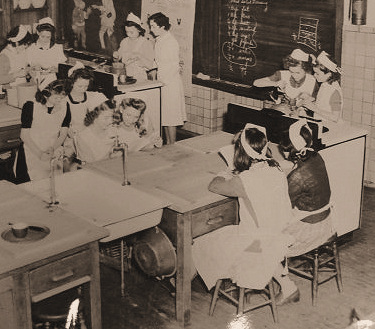
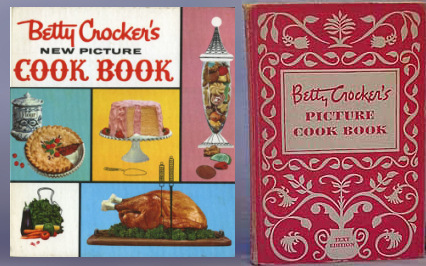
In the early 1960’s my mother sat in a home economics classroom thumbing through her “Betty Crocker New Picture Cookbook” like so many young women her age.  It was the colorful 3rd edition, the reprint of the trusty classic.  She kept that old book, in fact she still owns it.  When I was a girl I used it to learn to make bread and cookies and read through it.  For years I had wondered why housekeeping was so difficult for me and then it dawned on my sometimes thick skull,  I had no idea what I was doing. As I mentioned in my last menu planning article I didn’t learn the skills I needed to have to run a home a my mother’s knee.  I actually had to learn many of the most important things later and on my own which has been rather daunting and something I am still working on.   One thing I did that helped me was to purchase my own “Betty” from e-bay.  I had love my mother’s old edition.  When I left home my mother bought me the 6th edition, which had been sadly gutted to fit the “modern woman’s” needs.  So I eventually bought the older edition for myself. 

It was then that I started to see how much I was really creating extra work for myself simply by running my household so inefficiently.  Menu planning was one of the first things that I set my mind to fixing.  I started by just listing the meals my family likes and randomly fitting them into meals over the course of a few weeks.  This was far better than nothing, but still had a ways to go.  Kyle and I used the South Beach Diet.  Its menu plan covers everything from breakfast to desert and I found this to be even more helpful.  So I carried it farther.  I have used my Betty Crocker cookbook and two nutritional sites to help me develop my new menu plan templates you can read about the process behind that here.  
For my family and our nutritional needs this is the basic outline I use:

·     Vegetables:  at least 5 servings per day
·     Fruit:  2-4 servings per day
·     Whole grains: 4-11 servings per day
·     Legumes: 1-3 servings per day
·     Soy: 2-4 servings per week
·     Oils, nuts, seeds, olives: 3-9 servings a day
·     Dairy: 1-3 servings a day
·     Eggs: 1 per day
·     Fish 2-4 servings per week, with at least 2 being omega-3 rich or having omega-3 in something else
·     meat 1-3 servings per week


That is the goal.  Each day we have three meals and two snacks to fill.

·     Breakfast
·     morning snack
·     lunch
·     tea
·     dinner


So over a week it looks like this :

Sunday

Monday

Tuesday

Wednesday

Thursday

Friday

Saturday

Breakfast Breakfast Breakfast Breakfast Breakfast Breakfast Breakfast
vegetable Fruit vegetable Fruit vegetable Fruit Fruit
oils Dairy  Dairy Dairy Eggs Eggs  Eggs
Dairy Eggs Eggs Eggs Dairy Dairy Dairy
Eggs            
             
             
Morning Snack Morning Snack Morning Snack Morning Snack Morning Snack Morning Snack Morning Snack
Fruit vegetable Fruit vegetable Fruit vegetable vegetable
  Dairy oils Dairy oils Dairy  
             
             
Lunch Lunch Lunch Lunch Lunch Lunch Lunch
vegetable vegetable vegetable vegetable vegetable vegetable vegetable
Fruit Fruit Fruit Fruit Fruit Fruit Fruit
Legumes oils Legumes oils Legumes Legumes oils
oils   oils   oils oils  
             
             
Tea Tea Tea Tea Tea Tea Tea
vegetable vegetable vegetable vegetable vegetable vegetable vegetable
oils Legumes oils   Dairy oils Dairy
Dairy   Dairy        


Dinner Dinner Dinner Dinner Dinner Dinner Dinner
vegetable vegetable vegetable vegetable vegetable vegetable vegetable
Fruit Fruit Fruit Fruit Fruit Fruit Fruit
Oils Legumes meat Legumes Meat Dairy Legumes
Dairy oils oils oils oils oils oils
meat Dairy Dairy Dairy Dairy Fish Dairy
  Fish         Chicken or Fish

Whole grain at every meal, work soy into the menu at least two or three times.

This menu template covers the basics of good nutrition as I see it.  You might disagree or have some other important idea to work in.   But this more about practice than theory.   No matter what theory drives your menu plan at some point the theory has to work in practice.  Pretty much how I got the template was to list out what needed to be served, how many times per day or week then distributed the amounts over the day and week.   Any nutritional plan will lend itself to this method, though some will require more work than others.  

I list out my families favorite dishes and then place them into the menu.  Note that for vegetables the amount is unlimited the daily minimum is 5 serving.  A bean and vegetable soup for lunch with a whole grain roll with olive oil to dip and a piece of fruit will cover a legume, vegetable, whole grain, oil and fruit slot.  With that in mind it is easier to get all those servings in than it might at first seem.  Two vegetable servings can be covered as easily as having salad and steamed broccoli at the meal.  Peanut butter and celery or cauliflower bits with hummus for a snack fill both the slots for the tea-time snack.   I also don’t get overly stressed out about breaking the menu a little bit.  A slice of Canadian bacon at breakfast a couple times a week, a slice of lunch meat to make a veggie-turkey roll-up or even hot-dogs on a Saturday night is not something I worry about.  The menu plan is to serve me and my family with nutrition in mind, not become something rigid and painful.

All that said there is more to eating than vitamins and calories.  The Smart Homemaker of my Betty Crocker cookbook, of course she realizes that good nutrition is the cornerstone happy family meals, but she also knows that it takes more than just the “right” foods.  She stressed that our menus should be Appropriate to our situation, Be appetizing in appearance, be satisfying and that we should be mindful of cost.  To this list I personally add seasonal, local and as sustainable as possible.

Appropriate: Each family is different.  I am home during the day and this allows me to devote more time to meal preparation than some families.  We have a larger family, small children, we homeschool and we live in the city and we don’t have any allergies or food sensitivities.   If any of these things changed our meals might look different.

Menu planning has to also be appropriate to my brain.  For me it doesn’t make sense to reinvent the wheel each week.  I am a thinking junkie, in fact I can over think just about anything as all my friends and anyone who has read this blog can attest to. I like to weigh every possibility and find out all the facts and making a commitment to a decision gets me a little nervous.  Consequently I can burn a lot of time making choices.  Knowing this about myself I realize that every time I can remove deliberation out of the process I am saving myself a lot of time.  Set menu plans are a good thing for me, going through a stack of cookbooks and searching online for new recipes each week is going to take me too much time.  It is much better for me to use set menus.


Appearance:  Betty’s advice is to prepare, serve and present each meal attractively.  Plan ahead so that you serve a variety of colors an textures.  This adds both nutritional value and visual appeal to the meal.   Take the time to eat together, use the good china more frequently, set the table for dinner.   I was listening to a discussion on food several months ago, it may have been Michael Pollen who was speaking about how food has become less satisfying us, and part of the decline in that is how we have made eating so utilitarian.  It requires a certain time commitment to serve  a lovely meal at an attractive table for the whole family, but it is worth it for so many reason.

 Satisfaction:  This section could have been called “prepare with care” and it is closely related to the suggestions of appearance.  Well seasoned, carefully prepared food in variety is more satisfying.  I remember having read the little poem as a girl:

Something soft and something crisp
Should always go together,
And something hot with something cold
No matter what the weather;
Something bland needs the complement
Of something with tang and nip.
Follow these rules and all your meals
Will have taste appeal and zip.

  It really does make sense and isn’t as complicated as it seems, warm bread, a crispy salad and a well seasoned soup makes a perfect meal that follows the above suggestions to the letter.   Macaroni and cheese with peach slices and cooked carrots lacks variety in color and texture.  I served this once and my children, who usually are not the type to protest about any of those menu choices all looked at me sort of funny and complained:  “Everything is orange, mom”  caught off guard I had to come up with a quick reply, “ummm, yes, it is ‘Orange lunch’ today”.  They thought that was cool and happily ate it, but it does illustrate the point:  Even my little ones prefer a little variety of color and texture on the plate.

Wine: I know some people dislike wine or have some sort of objection to it.  We have wine, usually red, several times a week with dinner.  It is inline with most of the healthy eating plans I have seen and both my husband and I enjoy a glass with our evening meal.  It is a highly satisfying touch to the table for us.  As the children reach their teen years they are allowed a bit of their own on occasion and we are comfortable with this.  I have one acquaintance who drinks a small amount of red wine, for health reasons, but only when her children can’t see.  I suspect this sort of secretive behavior sets a worse example than pouring a glass at dinner would, but to each their own.

Technique: Cooking well make preparing your family meal more fun for you and more satisfying for everyone.  If you are new to cooking or haven’t had much success in the kitchen I highly recommend taking the time to learn basic kitchen techniques.  Alton Brown’s “I’m Just Here for the Food” is one of my favorites; there are websites that illustrate basic techniques and possibly even classes through your local college or home extension office.  Don’t be afraid to try something new from time to time.  I try to work one new recipe every two weeks or so.  Food in addition to being prepared to be satisfying can be very satisfying to prepare.

Cost: Food costs have gone up rather sharply lately and there are many places where you can cut family food budget.  Menu planning just by itself will help you save money.  You can plan ahead what to eat, you can stock your pantry when things are on-sale, take advantage of seasonal food, coupons and “loss leader sales”, you can shop at bulk and discount stores and you can basically eat better for less.  You might want to try cooking ahead or freezer cooking in order to save even more.  But the biggest differences for us are cutting out what I call “Oh, crap, dinners”  — those times when it is 5pm and I have no idea what to cook and nothing quick in the house to prepare which results in a last minute trip to the store or drive through.  When I am on top of my menu planning we aren’t making last minute trips to the store (saving time, gas and not purchasing impulse items) and we aren’t resorting to fast food and eating out which are both budget and diet busters.

Appropriateness, appearance, satisfaction, nutrition and cost are Betty Crocker’s list of important menu planning considerations.  But a lot has changed since the 1950s.  We are more aware of the impact our actions as a society have on our health and the environment in which we live. The University of Michigan Integrative Medicine’s Healing Foods Pyramid states that it emphasizes (among other things) “Support of a healthful environment”  the way in which our food is grown, the amount of pesticides, hormones and fertilizers all affect the health-value of our food and health of the land it is grown on.  Supporting local farm families in turn supports our communities economically.  All these things matter when put together.  While I am certainly not militant about being organic or “green” I view these ideas as personal lifestyle choices and I offer them up for consideration.

Seasonal, local and sustainable: Eating food that is in season locally allows you to take advantage of what is available in your farmer’s market and in local u-pick and small farms near you.  You might even be able to grow some of your own vegetables and seasoning.  Herbs are especially easy to go and require no more space then a window box or small platter; salad greens, radishes, green onions require very little more and tomatoes will happily grow in a large patio pot.   Learning to freeze, can, dry and/or pickle is a great way to save money, support local your local economy and avoid pesticides and other unwanted chemicals.   You might even be lucky enough to be able to purchase eggs, meat and dairy from small operations.   A side of beef in the freezer can provide meat for a year.  For items beyond your local market keep an eye open for fair-trade options to help ensure that more of the profit goes to those who actually produce the product.  Consider researching the possibilities available to you, you might find yourself happily surprised at the variety and quality. 

On a seriously Catholic note, you might also, when possible try top purchase from religious orders. The Anchoress has been raving about her sponsor “Mystic Monk Coffee“.   Many orders have some sort of food items they sell.  Hopefully I will be able to work up a list soon.  If you know of one please send me a link.

I will be continuing this series.  Next in the works is an article on Pantry and Shopping Lists and I will start posting completed menus later next week.