
I hope this Easter is beautifully blessed for everyone.
Living a Catholic Life in the Modern World
I hope this Easter is beautifully blessed for everyone.
My friends, Jenifer and Jeff, had their sixth last night. I was very happy to have been there for the birth. Such an exciting time.
Bloggin will probably be light this week as it is almost Easter, we have been sick for several weeks running and have fallen about 2 weeks behind for school, and, as always, there are about 15 million things for me to do.

A good friend of mine wrote me last week to ask about “the homeschooling thing”. Which delighted me to no end as I know their family would be fantastic homeschoolers. I found in answering her questions that I have quite different answers to the questions “Why did you start homeschooling?” and “Why do you homeschool?” both of which I am frequently asked and then there is yet a different answer to the rarely asked question “Do you think homeschooling is better than school?” and the more frequently asked “Are you nuts?”
Why we started homeschooling was pretty straight forward. Our local public elementary school is struggling under the burden of several large and diverse immigrant populations, the omnipresent specter of standardised testing, and the typical ills of city schools. Our parish school, in which our children were enrolled, went through a chaotic period, spiralling down into a toxic atmosphere and ending in a massive tuition hike before the school closed. Homeschooling at that point was a minor desperate reaction to figuring out what to do, but one that we were hopeful would work well for us.
And it has. Why we homeschool now really had nothing to do with why we started. I enjoy homeschooling. The kids enjoy it. Take away the better curriculum, the more engaging material, the spiritually sound environment, the great support of our parish homeschool group, the childrens’ homeschool friends, the one on one attention, take all that away and I still would love homeschooling because I get such a kick out of watching the children learn new things. Why we homeschool now is more a matter of lifestyle. Once we broke out of the box we started learning new things about learning. My husband and I are both self motivated learners. We both read a great deal, try new things, like talking about ideas and concepts and pushing ourselves ever so slightly each day to be more informed and engaged in life and learning. Basically we are autodidacts. So homeschooling fits us because our own experience has been that learning need not be confined to the classroom.
So do I think homeschooling is better than school. Well yes, for us. I can certainly see how others might not have the same type of experience. But good homeschooling would be very difficult for any school to match. First because homeschooling is focused on educating a particular child (or relatively small set of children) to the best of that child’s abilities taking into account that child’s aptitudes and interests. Secondly the nature of schools being political institutions creates a an atmosphere that is not educational in the classical sense. Politically the goals of schools are quite different from the goals of a classical education; schools more train than educate. Even where they educate the education is directed most commonly towards very utilitarian knowledge. This isn’t necessarily a bad thing. In fact as a citizen I certainly want the bulk of my community’s members to be trained in useful skills that create a good work force that provides me with the services I need. But I want my own children to be educated in the sense that they become rational human beings with a deep understanding of their own faith, culture and the natural world. As institutions schools will always be bogged down in administrative overhead that impacts classroom learning but doesn’t affect the family educating their own.
So are we nuts? (this is by far the most common question I am asked about homeschooling) …. Probably. But it is a happy nuts.
This weekend was a complete loss. I haven’t been so ill in years. I literally didn’t stir from my bed at all on Saturday and Sunday only managed to lay on the sofa in the living room and watch a couple Jane Austin movies while my family brought me tea and “Cream of Wheat” and generally did a very good job of taking care of me and leaving me mostly alone.
Today I am feeling better. Well enough to pull myself to the computer and do a small bit of work.
I have decided that the few days after I am feeling horrible are the worst. I can see what needs to be done but I really don’t have the energy to tackle anything. The house is in disarray, my sheets need changed and the bedding aired, the pantry is a bit picked over and I have no idea what Kyle has been feeding the children. All this I can deal with but at some point I need to brush my hair and wash it. I dread this. I have thick, coarse hair, with a good deal of curl that hangs to my mid back. Usually it is brushed and braided and in a neat little bun at the nap of my neck. Currently it is a sweaty, tangled mass, hanging awkwardly down my back and I am not quite up to the task of dealing with it yet.

As a convert to the Catholic faith I wasn’t raised with all the practices and habit of Catholic life. I didn’t grow up with table blessings and rosaries and mass every Sunday. In my RCIA we learned about many of these but there is a difference between the abstract knowledge of something and the actual doing it.
The one thing I have been struggling with the most is Confession. I could probably write a book about the “hows” and “whys” of Confession, in theory it is a wonderful, spiritual and useful practice. But in theory, oh my, how difficult it is to start. It took me eight years to start going to confession.
My priest is someone very easy for me to talk to. So we had a very good “pre-confession” meeting where I explained my situation. Going through RCIA I was preparing for Baptism so I didn’t have to “do” Confession as some of my classmates did. Those who were coming in for Confirmation met all together during Lent and made a confession. My sins, being washed away at Baptism, didn’t ‘count’. I suppose I could have gone to Confession at that point, but it wasn’t required so I didn’t. After our Baptism we were left to our own path. Mine avoided the confessional all together. And it has eaten at me all this time.
I longed for Confession; I needed it. I could feel the block working against me and keeping me from progressing in my walk with Christ as completely as I should be. So finally I screwed up my courage and took the plunge and met with my priest and just did it. Yeah me.
The part I found the worst and best was the examination of conscience. This is by far the most difficult thing to do. I found it helpful to have the printed “help” so I could look at it, think about it. Sin isn’t about feeling guilty. It is perfectly possible to sin and feel no guilt at all. Feelings are not a good indicator of guilt. The human conscience is a malleable thing and I know that if I allow myself to do certain things or think certain ways those things begin to seem justified and eventually right no matter how objectively wrong they are. I need to compare my actions not against what I feel to be correct but to what is objectively right.
One of the saddest losses in the Post Vat II era has been Confession. My priest expressed it very aptly when he said that the “face to face” confession has been disastrous experiment. The confession is not supposed to be a heartfelt talk with a friend nor is it a counselling sessions, though I suppose it can have aspects of both. The confession should be the opportunity to reconcile oneself with God and with your own soul, your own better self.
In retrospect I really wish that my RCIA program had met longer after we were Baptised. I think I would have been helpful to have had a “First Confession” meeting about a month later. This would seem to me to be helpful for the newly Baptised Catholic. But I suppose that Reconciliation is one of those things that really isn’t in favor in the American Catholic Church. I have read several articles this year about how Confession is coming back into “fashion”. Some Dioceses are encouraging the laity to come back to the confessional with formal programs such as The Archdiocese of Washington’s program “The Light is on for You“.
This weekend I found the video that I had originally wanted to put with this post so I am bumping it. I hope no one minds. Thanks to the Anchoress.
A couple weeks ago the Anchoress took a little break from blogging and on the way out left us with a link to an essay about Johnny Cash which can be found here. I read the essay really hopeful, ended up somewhat disappointed, but came away with a few useful thoughts. Key among these thought was this: God can bring the worst of us to moments of pure gold for His glory and for our good.
I will try to help you understand what I mean by that. One of the first few comments following the article was this, ” A rather shallow article about an unrepetant[sic] sinner. Can’t Catholic writers do better than this?” I have seen this attitude from my fellow Catholics far too often and Christians in general more times than I could remember. A slightly “holier than thou” attitude, pleading to the good that is really nothing more than thinly veiled self righteousness that smacks of deep-grained ugliness. This is not the light and saving love of Christ, liquid and vibrant, blood and flesh, fertile and open. It is a brittle, dried up attitude that claims itself superior while becoming more and more detached from the obligations of need and weakness on the human heart. It is the Pharisee and the Priest crossing to the other side of the road — tisking at the sinner, crime and the state of world while offering no balm to sooth it. And the greatest irony is the sinner they are tisking in the above comment was the one offering the balm to so many.
McMullen spends a good deal of time quoting Cash’s lyrics and relating them to his feelings as a Catholic. It is all in all an enjoyable read. But I feel it really didn’t go deep enough. There are two thoughts I feel are important.
First Cash is a man of his time. His voice spoke to men, hard working country men, men struggling with modern life and men for whom the Church had taken a feminizing turn that really turned them off. His songs struggle with faith as I am sure the man did, as many men of his generation did and many still do.
Second that Cash’s personal character and the state of his soul had very little to do with ability to serve as a tool in God’s hands. This is a thing that slips the minds of many Christians I fear. God doesn’t need us to be perfect, good, or even trying. God doesn’t need us to be in a state of grace, saved, believing or even wanting Him. He can take us while we are running at a break neck speed straight to the gates of hell and wring out of us something good. Sometimes for our souls and sometimes to save someone else.
Every once in awhile I read something that makes me outright chuckle. Last night I was sort of surfing around and I found a little gem. “You want to save the earth? Here’s a little hint. Don’t. Buy. Shit.” It was tucked away in an article over at Pajamas Media; Desperate (Green) Housewives. The article is a response to another at the New York Times which more or less takes a sarcastic look at the antics of suburban mothers consumed with “ecoanxiety” who are doing little things and spending lots of money to make the bad feelings go away. Laura McKenna takes the game a little further and points out the erratic hypocrisy of that particular style of “hip” green living in general.
I really had to laugh at the whole thing. What are those bad feelings called? You know the ones you get when you realise that your 4000 square foot house that is home to four people creates a huge tax on resources, not to mention all the stuff that it is filled with? The favored phrase is “ecoanxiety”, of course, anxiety is something that sounds treatable, pop a pill and relieve your anxiety, treat that symptom, get over it. It is a term coined to express an interior reality, a trick of the mind, a feeling that is rooted in mindset, something you should be able to just get over. If you call it what it really is, if you dare speak the word “guilt” then you create an external reality. With guilt there is something real wrong, something you must correct. There is no quick pill to take, you must repent to fix what you are doing. Guilt supposes a moral judgement.
If you feel guilty because your lifestyle is consuming more resources than is equitable than that is where you should start, your lifestyle. All those little pacifying “baby steps” might be better than nothing and they might make the “Green Moms” feel better, but the root problem, the core issue is left untouched.
I have a 14 year old daughter who is severely autistic.
This has been, in ways, the defining statement of my life. My daughter is severely autistic. This morning I was reading at Real Learning and found this video : What Kind of World Do You Want .
This brought up so many conflicting emotions for me. 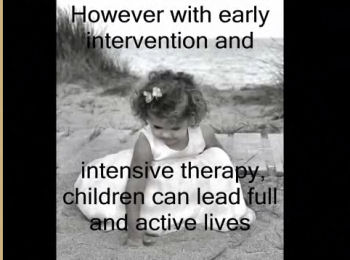
Because this sentence is true and yet it is NOT true for every child. There are some, I dare say many autistic children, while they are helped with early intervention and intensive therapy, are not brought up to the level where they can lead “full and active lives”. As a parent of an autistic child I latched on very deeply to the idea that if I did enough Rachel would have a normal life. I was offered more hope than possible every year. Finally the hope hand-outs stopped but not until Rachel was in Jr high.
I think all parents hold onto a certain amount of guilt when it comes to “doing enough” for their children. Everything from baby enrichment classes to SAT prep and sports, and dance, and art, and camp. Homeschool parents get to pick up a special type of guilt being responsible for our childrens’ entire education. We can all look back at our “parent-of-the-year” moments where we over reacted or said the wrong thing. Our childrens’ failures in a very real sense feel like our parenting failures. But with autism there is a deeper sense of failing. When every story about autism published is the miracle that shows an autistic child that with love and dedication the parents where able to find the “cure” and now their child is a happy fully functioning teen or adult. Where did I go wrong? What more could I have done? I have failed my child. My child is not cured the failure is therefore mine.
My daughter is 14 and still severely autistic. Did we not try hard enough? Did we not do enough? If Rachel was dealing with Down’s Syndrome would I be looking at myself in the mirror asking these questions? Probably not, because it is well acknowledged that Down’s is a genetic disorder, there is no miracle cure. But with autism, the causes are so elusive and the hope built up so high that self recrimination becomes very reasonable.
My thought is that as autism is more studied, as the “bubble” of autism ages that we will see many many more cases where early intervention did NOT fix it. Where parents did all they could and still they are looking at the teen years with autism as a very real part of their child’s life. I don’t exactly resent those parents who have found success with early intervention and intensive therapy, but they speak very loudly and the world likes to listen to them. Those of us with sadder stories speak quietly or not at all.
But we need to speak. We need to start speaking to one another and to the media at large. Just as our children needed money and research and acceptance with their diagnoses and early intervention they also need as adults. They need safe housing, they need law enforcement to be trained so that tragedies are avoided. We need laws changed so that our adult autistic children can receive funds for their housing and treatment without parents loosing their parental rights and the right to advocate for their children or make decisions about their lives. These are problems, real problems, they need addressed every bit as much as early treatment.
Wow! Lent comes early this year. February 6 to be exact. That means it is almost upon us and I still have some minor Christmas decorations to store. (mostly my end of the season floral “to good to pass up” deals). Each year we try to make our family Lenten sacrifice something meaningful. We also encourage the children to “give up” something within their abilities to manage.
Several years ago we gave up TV. It worked for us, in fact after a couple years of giving up TV as a family for Lent we gave it up entirely. We still own a TV and use it for watching videos, but we no longer have cable or any type of “station” — I am considering hooking up some rabbit ears so I can watch Masterpiece Theater’s Complete Jane Austen. I am ecstatic! They will be showing all the books. I wouldn’t resubscribe to cable for it… but a set of rabbit ears I can handle.
 Simply Catholic