Blogs I Know · My world · Simplicity

The most important moment of your life


Dancers — Edgar Degas

**Update**
The Anchoress has a wonderful bit on this topic and a charming video which she describes as, “a sweetly evocative scene of the joys of anticipation to which we – in our era of immediate gratification – no longer allow ourselves.”

*******

The most important moment of your life is happening right now.   I think it can be a sign of the Holy Spirit moving in God’s people when many of us start thinking about the same thing.  Or it could just be that we all talk to each other and hear and read what each other are saying and start to repeat the same things.  But in this case I like the more super-natural explanation.  The most important moment of your whole life is now, because is the only moment you can effect.  That past is done, though it may have consequences that we have to deal with now.  And the future isn’t here yet, though we probably will have some plans to make for it.  But all in all we live in the flow of time, we live in the moment.

No matter how much we plan, how much we reflect, none of that is as important as how we live the moment we are in.  Being intentionally and fully engaged in what we are doing give the moments of our lives meaning.  Allowing ourselves to be distracted from the present by juggling the hectic pace of modern life with the real needs of ourselves and those in our lives robs us, not just of our peace, but of the quality of life that God intends His children to experience.  Everything we do can be impacted by a lack of intention or made more meaningful when done with intention. 

I have been spending a good deal of time thinking about the whole idea of intentionally living in each moment lately.  I find that it makes me a better person, a better mother, a better wife, a better friend.   But it is hard to do.   It is almost stupefying difficult at times to focus on where I am and what I am doing without feeling pressed by all those many, many things on my “to do” list.  

Yesterday my daughter Hannah had her end of the year ballet performance (I didn’t get pictures, but you can see some of the classes here).  Six and seven year-old girls were dressed in white tulle tutus and their black leotards, pink tights and shoes.  Their hair was up and decorated with ribbons and little flowers.  Their dancing was a combination of the joy of having mastered some of their steps and the intense concentration in parts where they were less certain.  

I remembered back to my own days of studying ballet.  How it was not just a matter of training the body but the mind had to be fully engaged — evaluating and adjusting and correcting each position and step, listening to the music, staying on beat, anticipating the next move as it effected the current one.  The heart and soul became part  of the music and turned what was otherwise nothing but an aerobic set of motions into art. 

These little girls, there before their parents, siblings and friends, sharing with the most important people in the world the moment they were living most fully.  That is what I want to capture more in my life everyday, intensely, fully and intentionally living every moment God sees fit to bless me with.

My world

Bits and pieces


The Broken Pitcher,  William-Adolphe Bouguereau  

 
If you are wondering about your recent unpublished comment or unanswered email: I deleted it.  No, I am not sorry,  I am just unfair that way.  A long time ago I really loved online debating.  But at this point in my life I have no desire to read, much less respond to some total stranger’s comments about my logic, mental state, life, children or opinions.  It isn’t that I don’t think you are worthy of the exchange and I am sure there are others who will gladly play that game with you, but it isn’t me.   I thought about it, but in the end I just don’t want to spend my time that way. 

The images I use on this site: They are either in the public domain, my own pictures, or they are purchased through a stock photography site.   If you want some wonderful pictures for your own site you might want to check out Wikimedia Commons

My daughter Rachel: She does attend mass and she does receive Holy Communion, she lives in a residential group home and comes home on the weekends about every other week.  We have never had any serious problem with Rachel in mass. We have never had any problem from any parishioner or any priest about having Rachel in mass. We have benefited greatly from the services of the Archdiocese Office for People with Disabilities.

For my real life friends: I love your prayers.   I will never look at what I write here quite the same way again and this morning I feel incredibly blessed.   My little frustration has been completely resolved.

Autism · Catholic stuff · My world

About Carol Race from someone who knows her.

The Parish of St. Joseph In Bertha, Minn has barred Adam Race from attending mass because of behaviors stemming from his autism.  I honestly thought I was done blogging on this yesterday, having also blogged on it the day before, but then I received a heart-felt comment from a priest who knows Carol Race personally and wanted to post his take on the issues.  While his additional information hasn’t changed my personal feelings on this story I want to share them with you in a spirit of being fair, and also with the recognition that I do have a horse in this race so to speak and I don’t want my feelings clouding what is right and true. 

***
Update: 

My latest update on this story is here.

Would those of you who are interested in this story please remember Fr Showers, Carol Race and Adam in your prayers.  I know this is a difficult time for all of them.  I pray that God blesses them all with  peace and fortitude and understanding in discerning what is best for Adam.
***

Below is Fr. Robert G. Showers comment to my blog post “A little more about Adam Race” followed by my response to him.

Dear Darcee,

Thank you for this posting. I do hope that your anger has subsided. You seemed especially upset that Mrs. Race “spent the day lining up legal help.” I allow myself gently to point out that the pastor and the parish council are the ones who chose to unleash the media storm – they chose to go ahead with a restraining order and themselves reported the fact to the press, knowing full well the circus that would follow. After having been threatened with jail time and with news cameras already in her face, Mrs. Race was well advised to spend the day lining up legal help. The parish had lined up their legal help well in advance.

And she was advised. Mrs. Race took this step on the advice of advocacy groups for the handicapped of which she is an active member.

I know Mrs. Race because we studied theology together. This mom in Minnesota is actually a professional Roman Catholic theologian who studied dogmatic theology under the now Cardinal Archbishop of Vienna, Christoph von Schönborn. Her love for the Church has been constant from her early work on the Catechism of the Catholic Church while she lived in Switzerland to her years as DRE in the Twin Cities to recent years, where she has served her parish in many capacities. She began writing about the place of children, including handicapped children, in the heart of the People of God from way before she could have known that she herself would become the mother of a severely autistic child. As the godfather of one of her children, I have followed this family for many years from my friary here in Scandinavia.

Please believe me, that it pains Mrs. Race a great deal that the Catholic Church is made to look bad. It is true that the parish “offered alternatives” – but all of these so called alternatives were ways to keep Adam out of the church, for example, they offered special Masses just for him in private at home, closed circuit transmissions of the Mass directly to his home – and other fanciful ideas designed to spare people the sight and sounds of a handicapped boy in church.

In my heart, I pray that I am wrong when I suspect that the real issue is fear. Some adults in that parish (including the priest) seem to be afraid of this autistic child, a fear born, it seems, of ignorance and prejudice. I feel like I am reading a novel about the 13th century, but fear of “odd” people strikes deep – in this sense, this truly IS an issue of faith.

I thank you for your insightful and honest comments. You have a good blog here.

Peace and all good,
Fr. Robert G. Showers OFM Conv.
guardian of Consolatrix Afflictorum Friary in Roskilde, Denmark

Continue reading “About Carol Race from someone who knows her.”

My world

Slow week for the blog –

Busy week for me

Saturday:Saturday started on Friday when Kyle and I went out to fix the boy’s bunk bed situation.  We had ordered a nice set from American the Beautiful Dreamer and they hadn’t come in, it had been a month, the store person (Lilly) was a perfect gem and really nice, but the best should could tell us was maybe by June they would be in.  So we took back our deposit and went looking.  I had heard their might be some bunk beds available homeschool community, but it looked like someone else was interested in those before us so we went ahead and headed to one of the furniture stores that was going bankrupt and picked up a good deal on a really nice set.

Enter Saturday morning.  My dad has a rather large truck so we borrowed it went and got the beds and mattresses and then unloadedthem and put them together.  Happy boys, sore muscles and some darn nice looking beds:

Sunday:  We do more driving on Sundays than we do the rest of the week combined.  First to mass, then to either get Rachel and then  take Rachel home or just take her home, take Ashely to her Social thing then back to pick her up.  Crazy times. 

Monday: Monday is always busy.  It is my Kitchen day.  This Monday was so beautiful.  The weather was just perfect.  We spent the whole day hanging laundry out on the new line, playing in the back yard, doing seeds for science and riding bikes.  Just a fantastic day.

Tuesday: Was busy also, I made bread, did more laundry. The rain returned so we had to move the drying indoors.  I had some client work that needed attending.

Wednesday: Always our fun day.  We had CCD and our homeschool group in the afternoon.  Made crock-pot dinner and had a good day.

Thursday: Started with an Ashley Dr appointment (regular check up stuff) then had friends over for dinner.  Lots of fun.  Lots of kiddo fun five of ours and five of theirs all having as much noisy fun as possible.  Insanely loud, busy boys.  Dinner turned out good, I made a couple pies  the husbands got to get acquainted and seemed to hit it off.  We all looked up at the clock and were shocked that it was after 10pm.  Then I had to take Christoper over to my parent’s house so he could go camping with dad this weekend.

Friday: Man it is Friday already…..

Homemaking · Mary Mary and Martha · My world

Menu Planning Part 2

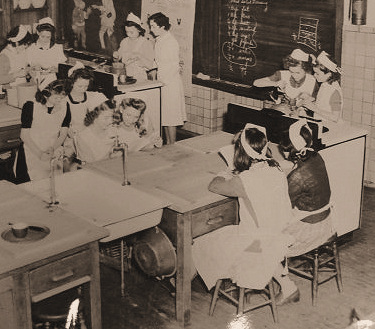
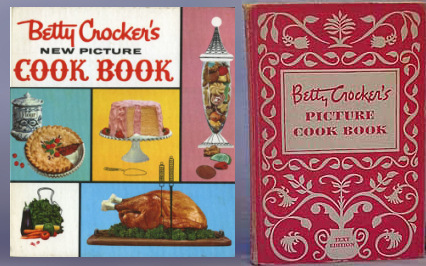
In the early 1960’s my mother sat in a home economics classroom thumbing through her “Betty Crocker New Picture Cookbook” like so many young women her age.  It was the colorful 3rd edition, the reprint of the trusty classic.  She kept that old book, in fact she still owns it.  When I was a girl I used it to learn to make bread and cookies and read through it.  For years I had wondered why housekeeping was so difficult for me and then it dawned on my sometimes thick skull,  I had no idea what I was doing. As I mentioned in my last menu planning article I didn’t learn the skills I needed to have to run a home a my mother’s knee.  I actually had to learn many of the most important things later and on my own which has been rather daunting and something I am still working on.   One thing I did that helped me was to purchase my own “Betty” from e-bay.  I had love my mother’s old edition.  When I left home my mother bought me the 6th edition, which had been sadly gutted to fit the “modern woman’s” needs.  So I eventually bought the older edition for myself. 

It was then that I started to see how much I was really creating extra work for myself simply by running my household so inefficiently.  Menu planning was one of the first things that I set my mind to fixing.  I started by just listing the meals my family likes and randomly fitting them into meals over the course of a few weeks.  This was far better than nothing, but still had a ways to go.  Kyle and I used the South Beach Diet.  Its menu plan covers everything from breakfast to desert and I found this to be even more helpful.  So I carried it farther.  I have used my Betty Crocker cookbook and two nutritional sites to help me develop my new menu plan templates you can read about the process behind that here.  
For my family and our nutritional needs this is the basic outline I use:

·     Vegetables:  at least 5 servings per day
·     Fruit:  2-4 servings per day
·     Whole grains: 4-11 servings per day
·     Legumes: 1-3 servings per day
·     Soy: 2-4 servings per week
·     Oils, nuts, seeds, olives: 3-9 servings a day
·     Dairy: 1-3 servings a day
·     Eggs: 1 per day
·     Fish 2-4 servings per week, with at least 2 being omega-3 rich or having omega-3 in something else
·     meat 1-3 servings per week


That is the goal.  Each day we have three meals and two snacks to fill.

·     Breakfast
·     morning snack
·     lunch
·     tea
·     dinner


So over a week it looks like this :

Sunday

Monday

Tuesday

Wednesday

Thursday

Friday

Saturday

Breakfast Breakfast Breakfast Breakfast Breakfast Breakfast Breakfast
vegetable Fruit vegetable Fruit vegetable Fruit Fruit
oils Dairy  Dairy Dairy Eggs Eggs  Eggs
Dairy Eggs Eggs Eggs Dairy Dairy Dairy
Eggs            
             
             
Morning Snack Morning Snack Morning Snack Morning Snack Morning Snack Morning Snack Morning Snack
Fruit vegetable Fruit vegetable Fruit vegetable vegetable
  Dairy oils Dairy oils Dairy  
             
             
Lunch Lunch Lunch Lunch Lunch Lunch Lunch
vegetable vegetable vegetable vegetable vegetable vegetable vegetable
Fruit Fruit Fruit Fruit Fruit Fruit Fruit
Legumes oils Legumes oils Legumes Legumes oils
oils   oils   oils oils  
             
             
Tea Tea Tea Tea Tea Tea Tea
vegetable vegetable vegetable vegetable vegetable vegetable vegetable
oils Legumes oils   Dairy oils Dairy
Dairy   Dairy        


Dinner Dinner Dinner Dinner Dinner Dinner Dinner
vegetable vegetable vegetable vegetable vegetable vegetable vegetable
Fruit Fruit Fruit Fruit Fruit Fruit Fruit
Oils Legumes meat Legumes Meat Dairy Legumes
Dairy oils oils oils oils oils oils
meat Dairy Dairy Dairy Dairy Fish Dairy
  Fish         Chicken or Fish

Whole grain at every meal, work soy into the menu at least two or three times.

This menu template covers the basics of good nutrition as I see it.  You might disagree or have some other important idea to work in.   But this more about practice than theory.   No matter what theory drives your menu plan at some point the theory has to work in practice.  Pretty much how I got the template was to list out what needed to be served, how many times per day or week then distributed the amounts over the day and week.   Any nutritional plan will lend itself to this method, though some will require more work than others.  

I list out my families favorite dishes and then place them into the menu.  Note that for vegetables the amount is unlimited the daily minimum is 5 serving.  A bean and vegetable soup for lunch with a whole grain roll with olive oil to dip and a piece of fruit will cover a legume, vegetable, whole grain, oil and fruit slot.  With that in mind it is easier to get all those servings in than it might at first seem.  Two vegetable servings can be covered as easily as having salad and steamed broccoli at the meal.  Peanut butter and celery or cauliflower bits with hummus for a snack fill both the slots for the tea-time snack.   I also don’t get overly stressed out about breaking the menu a little bit.  A slice of Canadian bacon at breakfast a couple times a week, a slice of lunch meat to make a veggie-turkey roll-up or even hot-dogs on a Saturday night is not something I worry about.  The menu plan is to serve me and my family with nutrition in mind, not become something rigid and painful.

All that said there is more to eating than vitamins and calories.  The Smart Homemaker of my Betty Crocker cookbook, of course she realizes that good nutrition is the cornerstone happy family meals, but she also knows that it takes more than just the “right” foods.  She stressed that our menus should be Appropriate to our situation, Be appetizing in appearance, be satisfying and that we should be mindful of cost.  To this list I personally add seasonal, local and as sustainable as possible.

Appropriate: Each family is different.  I am home during the day and this allows me to devote more time to meal preparation than some families.  We have a larger family, small children, we homeschool and we live in the city and we don’t have any allergies or food sensitivities.   If any of these things changed our meals might look different.

Menu planning has to also be appropriate to my brain.  For me it doesn’t make sense to reinvent the wheel each week.  I am a thinking junkie, in fact I can over think just about anything as all my friends and anyone who has read this blog can attest to. I like to weigh every possibility and find out all the facts and making a commitment to a decision gets me a little nervous.  Consequently I can burn a lot of time making choices.  Knowing this about myself I realize that every time I can remove deliberation out of the process I am saving myself a lot of time.  Set menu plans are a good thing for me, going through a stack of cookbooks and searching online for new recipes each week is going to take me too much time.  It is much better for me to use set menus.


Appearance:  Betty’s advice is to prepare, serve and present each meal attractively.  Plan ahead so that you serve a variety of colors an textures.  This adds both nutritional value and visual appeal to the meal.   Take the time to eat together, use the good china more frequently, set the table for dinner.   I was listening to a discussion on food several months ago, it may have been Michael Pollen who was speaking about how food has become less satisfying us, and part of the decline in that is how we have made eating so utilitarian.  It requires a certain time commitment to serve  a lovely meal at an attractive table for the whole family, but it is worth it for so many reason.

 Satisfaction:  This section could have been called “prepare with care” and it is closely related to the suggestions of appearance.  Well seasoned, carefully prepared food in variety is more satisfying.  I remember having read the little poem as a girl:

Something soft and something crisp
Should always go together,
And something hot with something cold
No matter what the weather;
Something bland needs the complement
Of something with tang and nip.
Follow these rules and all your meals
Will have taste appeal and zip.

  It really does make sense and isn’t as complicated as it seems, warm bread, a crispy salad and a well seasoned soup makes a perfect meal that follows the above suggestions to the letter.   Macaroni and cheese with peach slices and cooked carrots lacks variety in color and texture.  I served this once and my children, who usually are not the type to protest about any of those menu choices all looked at me sort of funny and complained:  “Everything is orange, mom”  caught off guard I had to come up with a quick reply, “ummm, yes, it is ‘Orange lunch’ today”.  They thought that was cool and happily ate it, but it does illustrate the point:  Even my little ones prefer a little variety of color and texture on the plate.

Wine: I know some people dislike wine or have some sort of objection to it.  We have wine, usually red, several times a week with dinner.  It is inline with most of the healthy eating plans I have seen and both my husband and I enjoy a glass with our evening meal.  It is a highly satisfying touch to the table for us.  As the children reach their teen years they are allowed a bit of their own on occasion and we are comfortable with this.  I have one acquaintance who drinks a small amount of red wine, for health reasons, but only when her children can’t see.  I suspect this sort of secretive behavior sets a worse example than pouring a glass at dinner would, but to each their own.

Technique: Cooking well make preparing your family meal more fun for you and more satisfying for everyone.  If you are new to cooking or haven’t had much success in the kitchen I highly recommend taking the time to learn basic kitchen techniques.  Alton Brown’s “I’m Just Here for the Food” is one of my favorites; there are websites that illustrate basic techniques and possibly even classes through your local college or home extension office.  Don’t be afraid to try something new from time to time.  I try to work one new recipe every two weeks or so.  Food in addition to being prepared to be satisfying can be very satisfying to prepare.

Cost: Food costs have gone up rather sharply lately and there are many places where you can cut family food budget.  Menu planning just by itself will help you save money.  You can plan ahead what to eat, you can stock your pantry when things are on-sale, take advantage of seasonal food, coupons and “loss leader sales”, you can shop at bulk and discount stores and you can basically eat better for less.  You might want to try cooking ahead or freezer cooking in order to save even more.  But the biggest differences for us are cutting out what I call “Oh, crap, dinners”  — those times when it is 5pm and I have no idea what to cook and nothing quick in the house to prepare which results in a last minute trip to the store or drive through.  When I am on top of my menu planning we aren’t making last minute trips to the store (saving time, gas and not purchasing impulse items) and we aren’t resorting to fast food and eating out which are both budget and diet busters.

Appropriateness, appearance, satisfaction, nutrition and cost are Betty Crocker’s list of important menu planning considerations.  But a lot has changed since the 1950s.  We are more aware of the impact our actions as a society have on our health and the environment in which we live. The University of Michigan Integrative Medicine’s Healing Foods Pyramid states that it emphasizes (among other things) “Support of a healthful environment”  the way in which our food is grown, the amount of pesticides, hormones and fertilizers all affect the health-value of our food and health of the land it is grown on.  Supporting local farm families in turn supports our communities economically.  All these things matter when put together.  While I am certainly not militant about being organic or “green” I view these ideas as personal lifestyle choices and I offer them up for consideration.

Seasonal, local and sustainable: Eating food that is in season locally allows you to take advantage of what is available in your farmer’s market and in local u-pick and small farms near you.  You might even be able to grow some of your own vegetables and seasoning.  Herbs are especially easy to go and require no more space then a window box or small platter; salad greens, radishes, green onions require very little more and tomatoes will happily grow in a large patio pot.   Learning to freeze, can, dry and/or pickle is a great way to save money, support local your local economy and avoid pesticides and other unwanted chemicals.   You might even be lucky enough to be able to purchase eggs, meat and dairy from small operations.   A side of beef in the freezer can provide meat for a year.  For items beyond your local market keep an eye open for fair-trade options to help ensure that more of the profit goes to those who actually produce the product.  Consider researching the possibilities available to you, you might find yourself happily surprised at the variety and quality. 

On a seriously Catholic note, you might also, when possible try top purchase from religious orders. The Anchoress has been raving about her sponsor “Mystic Monk Coffee“.   Many orders have some sort of food items they sell.  Hopefully I will be able to work up a list soon.  If you know of one please send me a link.

I will be continuing this series.  Next in the works is an article on Pantry and Shopping Lists and I will start posting completed menus later next week. 


40 bags of stuff. · Homemaking · Mary Mary and Martha · My world

40 Trash bag Challenge


So far I have managed to get about 17 bags of stuff out of my house for good.  Most of this is old clothing and sheets.  In part because I haven’t even gotten out of the bedroom closet area.  Today I am heading into the bathroom and then on to the girl’s room. 

I was about to write that I hadn’t learned anything insightful so far, but that isn’t true.  When Kyle and I were going through the closet (I didn’t want to toss anything of his without his input) one thing we both noticed was how ofter we said “Wow, I forgot I owned that”.  We have some items that we more or less store in our closet and somehow things we like had dissapperead behind things we didn’t and before long they were completly forgotten.  So, the lesson I take from this is pretty straight forward.  Don’t store things you rarely use with things you use all the time.  Seperate them in some way.  Put them in a storage bag or box, move them to a storage area in your home, but sperate them in some way.  This lesson was reiterated with the linen closet.  Things had more or less been put back in a rather haphazard manner and so it was difficult to find sets, pillow cases had taken to hidding in the oddest places and a good portion of this problem was simply that there were too many items not regularaly used mixed in with the items I need every week.

Catholic Homeschooling · My world

May for Mary


May is the month of Mary, the Blessed Mother.  At our parish there is a Grotto on the north side where we have a beautiful statue of Mary and the children love bringing flowers to Mary when we go for mass or CCD. 

This month we have a few activities that we will be working on.  The biggest is to plan our “Mary Garden” this has been a long term thing for me.  Something I keep thinking about then putting off and picking back up but I haven’t done it.  This month we will be actually doing it.  

We are also going the be studying the Rosary prayers and talking about the life of Christ through his mother’s eyes.  Kind of exciting really.

One of the things as a convert to the Catholic faith that took a long time for me to click with was the Mary thing.  Part of me didn’t really get it.  I could intellectually say that yes, Mary is very special, she has a unique mission in all of creation and she lived her mortal portion out in a way that is splendid and shinning example, but at the same time it just didn’t click.

Slowly I got to know her better.  I can see my own need for a mother in my faith experience.  The rosary has been helpful there, especially reflecting on the mysteries and how they show Christ to us in the most intimate and human way, through the eyes of his mother.

Homemaking · Mary Mary and Martha · My world · Uncategorized

Menu planning

One of my old stand-bys is my 1950, Betty Crocker Cookbook, 1st edition.  (Now, I know that Betty Crocker wasn’t a real person.. but I still find a bit of humor in thinking of the cookbook as “Betty” — my grandmother is another Betty so maybe this adds to the charm, but either way I hope you can bare my bit of madness here as I refer to her as a real person.) My tattered red friend is not the reprint, but the original with all its sexist little comments and admonitions on being an active and productive homemaker.   It is filled with good advice about work habits, entertaining, recipe short-cuts, meal planning and nutrition.  

One thing I find most useful is this book assumes nothing.  It starts from the idea that the reader is a complete homemaking ingenue and goes from there.   So it actually covers things that one would have assumed that a young woman growing up in the 30s and 40s would probably know.  Betty Crocker advises that the homemaker plan menus at least one week at a time and better to do two weeks or even a month at once, to shop only once or twice a week.  The second shopping trip should be for perishables.   She suggests keeping a “well stocked emergency shelf”  to deal with those unexpected guests or inordinately hectic days where the lady of the house is too busy for shopping and cooking.  All sensible and good advice and I think that the starting point is spot on,  nutrition.

Now, Betty Crocker, 1950, is a little behind on the scientific discoveries of today.  But, Betty and her counterparts knew full well that little Judy and Johny needed nutritionally balanced meals so they could grow up and become useful and happy adults.  In the 1950’s cookbook there is no fudging on who is responsible for seeing that happens. Mom is the “go-to” person for healthy meals, clean and tastefully decorated homes and family entertainment.  The world has changed a great deal.  The young homemaker of 1950 was held to a somewhat different set of standards but, she also wasn’t facing some of the same temptations and bad habits that we face.  In the chapter on short-cuts she mentions that in larger cities there are places where you can pick up whole meals and take them home as a modern marvel, almost experimental in their novelty.   It was 5 years before Ray Kroc would open his first McDonald’s, packaged food was almost non-existent,  the first Swanson TV dinner wouldn’t hit the store shelf for four more years.  So, while the details of what was then considered a healthy meal are dated, the principles and the application of planning and preparing are, if anything, even more relevant to today than when they were written. 

Betty Crocker quotes the “Smart Homemaker” saying, “My meals are more nutritious since I’ve been planning them ahead.  I check in advance the basic foods and the daily needs of my family.”   To get a good idea of what those basic needs are I use the Harvard Healthy Eating Pyramid.  It took more tweaking than I would have liked to figure out how to translate the pyramid into meals.  For some reason the geniuses at Harvard figured that spelling things out in “servings” wasn’t how people really eat.  To help out on this and to get a bit of a different angle I also looked at The UMIM Healing Foods Pyramid  which actually turned out to be more practical.  I finally got it worked out and could create a template for menus.  The raw template has “slots” for menu items that I can drop items from the different categories into to create meals.   

 I know there are many different food plans out there, with different claims to what is the most healthy way to eat.  And really, I am not going to sort that out or make any judgement for anyone else on that. Find what works for you according to your family’s tastes, your beliefs and culture and what makes sense to you.  What makes sense to me the two pyramids married with the idea of local and seasonal food and sustainable agricultural practices.   In practice we use too much red meat, I am not giving up my coffee and there are those Goldfish crackers. 

One thing that has surprised me is how much effort it really took to get to this point.  My grandmother learned menu planning in her home and while working as a cook for a ranch.  My mother has often told me how little she learned at home, her mother apparently shewed her out of the kitchen more often than not but mom did have a home economics class in high school.  My mother did the homemaker thing when I was very young then entered the work-force, never to look back and swore she wouldn’t be some 1950s housewife who’s greatest achievement was having the cleanest toilet on the block and by the time I made it to high school home economics was optional and sort of looked down on.  I came to adulthood ill-equipped to manage a family menu, much less a household and I have had to basically teach myself.  

My next menu planning article will break down into a little more detail about how you get from theory to shopping list.


Autism · Faith in Action · My world · Uncategorized

Can my autistic child receive communion?

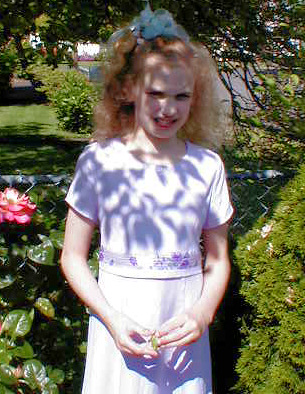
Rachel dressed for mass
Rachel all ready for mass

 The answer is a qualified yes.  From Guidelines for the Celebration of the Sacraments with Persons with Disabilities

Eucharist

19. The eucharist is the most august sacrament, in which Christ the Lord himself is contained, offered, and received, and by which the Church constantly lives and grows. It is the summit and the source of all Christian worship and life, signifying and effecting the unity of the people of God, providing spiritual nourishment for the recipient, and achieving the building up of the Body of Christ. The celebration of the eucharist is the center of the entire Christian life (Canon 897).

20. Parents, those who take the place of parents, and pastors are to see to it that children who have reached the use of reason are correctly prepared and are nourished by the eucharist as early as possible. Pastors are to be vigilant lest any children come to the Holy Banquet who have not reached the use of reason or whom they judge are not sufficiently disposed (Canon 914). It is important to note, however, that the criterion for reception of holy communion is the same for persons with developmental and mental disabilities as for all persons, namely, that the person be able to distinguish the Body of Christ from ordinary food, even if this recognition is evidenced through manner, gesture, or reverential silence rather than verbally. Pastors are encouraged to consult with parents, those who take the place of parents, diocesan personnel involved with disability issues, psychologists, religious educators, and other experts in making their judgment. If it is determined that a parishioner who is disabled is not ready to receive the sacrament, great care is to be taken in explaining the reasons for this decision. Cases of doubt should be resolved in favor of the right of the baptized person to receive the sacrament. The existence of a disability is not considered in and of itself as disqualifying a person from receiving the eucharist.

21. Eucharistic celebrations are often enhanced by the exercise of the diverse forms of ministry open to the laity. In choosing those who will be invited to use their gifts in service to the parish community, the parish pastoral staff should be mindful of extending Christ’s welcoming invitation to qualified parishioners with disabilities.

When we were looking into First Communion for Rachel we wanted two things.  We wanted to follow the teaching of the Church as hard as it can be sometimes when your child is disable there are things that won’t work for them, if it was determined that Rachel lacked sufficient understanding or was unable to receive reverently we would have accepted that and trusted that God would bless her life in other ways. But we wanted our child to be able to participate as fully as possible in the life of the Church. 

I was really sadded by the story of an eight-year-old girl who was intolerant of wheat and the way her mother decided to deal with the issue of her daughter receiving communion.  The only valid medium for the Eucharistic bread is wheat.  For those who can’t consume wheat they may receive the wine only and that is valid, every bit as much as the reception of bread alone.  What bothered me so much about the above news story was how the mother acknowledged that she knew that her daughter could receive the wine, but in her opinion an eight-year-old shouldn’t ingest any alcohol and so the entire Church would have to change the dogma of two-thousand years because she didn’t want her daughter to have a miniscule taste of wine.  “It’s not appropriate for children to drink alcohol,” she said. “Even a sip.”   The last thing I wanted to do when looking at this sacrament for my own child was to become so caught up in what I wanted that I missed what was resonable and right.  So the question of Rachel understanding that the host was not just a little snack weighed on me heavily.

There were some signs that Rachel did understand.  She had always been very caught up with food.  One cookie was never enough.  It was always surprising to me that she had never reached for or grabbed a host when I went to receive Communion.  But reason suggested that since she never had one she might not see them as food.  I was somewhat comforted by the idea that in “Cases of doubt should be resolved in favor of the right of the baptized person to receive the sacrament”.  I talked to my priest, to our Diocese director of the Office for People with Disabilities and to the Lord in prayer.  But in the end it was God, through Rachel, who let us know that she understood enough to receive.

 My small bits of advice gleaned from what I have read and my own experience:

  1. As your child approaches the age typical in your parish for First Communion speak with your priest and/or the person responsible for religious instruction in your parish.  Go in with an open mind and heart and explain your child’s situation as fully and objectively as you can.   Listen to what they say and consider it thoughtfully.The vast majority of priests want to serve their parishioner and they want to serve the Church and to do both faithfully. In my experience it has actually been the more liberal priests who are the ones most likely to say that your child shouldn’t participate in the Sacraments at all.  I have heard several mothers say that they went to Fr.             and he said their child didn’t need the Eucharist (or reconcilliation).  Sometimes going back with Guidelines for the Celebration of the Sacraments with Persons with Disabilities in hand is helpful.  Generally their reason for refusing is some idiotic banality about how “your child is so close to God already because their are disabled they don’t need to receive Communion.”   Don’t buy this, we all need grace.   It is one thing if your child really doesn’t understand that this is a special thing, a holy thing, and would not approach the sacrament with reverence, but not some fluffiness about not needing it.
  2. If you can not come to some agreement at the parish level don’t be afraid to go to the diocese.  I wouldn’t say just go straight to the Bishop, but if you need to you need to.
  3. When it is decided that your child is capable of receiving the Eucharist there are some wonderful resources for helping your child prepare. Meyer Johnson has communion symbols available for their products.  We used these to help create a social story for Rachel.  There are also some good books available for First Communion with colorful pictures and simple explanations.
  4. Test drive with an unconsecrated host if you think there is ANY chance that your child will spit it out or not eat it.  Reverence for the Body of Christ has to come above all else.  I know there are a few people who might think that sounds harsh, but if we don’t believe in the Eucharistic miracle what is the point?  I know personally the hurt that pulls at your heart when you realise that your child can do something because of their disability and how much worse it is with those lovely rites of passage like First Communion, but we are talking about the actual presence of Christ and the reverence that demands must trump parental sentiment.  When we were preparing Rachel for her first communion we brought home a half a dozen unconsecrated hosts and she was happy to eat it and seems to like the flat, tasteless breads.   I know that for some people with autism the texture is off-putting.  Be sure to let your priest know if a smaller bit is better.  For the rite to be valid only the smallest bit is needed so be sure to explore that option before the day if that seems appropriate. 
  5. You can also validly receive the wine alone.  The same caveat applies.  Be sure that your child won’t just spit it out, but if the bread is not working for you that could be an option to explore.  Your priest will most likely be happy to work with you on this.  Most parishes that I have been in have allowed the children to try a tiny sip of the unconsecrated wine before they experienced it in mass.  Some children really don’t like the taste and no priest wants to risk desecrating the host.
  6. If a packed First Communion mass would spell disaster for you First Communicant talk to your priest about about your child either receiving their First Communion as part of a regular mass or communion service.  Sometimes a small weekday mass works better.  Or see if your Diocese has masses for people with disabilities that might serve your families needs.


Finally, the Church wants to serve your family and your child, each individual member of the Body of Christ.  At the same time She is also trusted with safeguarding the sacraments and traditions of the Church.  Most priests, the US Bishops and Rome all echo that every being, no matter their state in life or their disability is of infinite worth, a full person of dignity and worthy of the utmost respect and they want each soul to participate in the sacramental life as much as they able to within the limits of their understanding and capabilities.


Catholic Homeschooling · Mary Mary and Martha · My world

Washing

When you have a large family laundry becomes a project.  It is not a matter of tossing half the clothing you own in the washer and then taking off for the day.  When you have a large family the laundry must flow.  Or you face the horde looking at you half dressed wondering where their socks and pants are while you are frantically trying to find one clean shirt while trying to get out the door for an appointment. I have already written about our laundry containment system of multiple hampers.   Now, I will get down to the nitty-gritty of washing. 


In our laundry system the clothing is already sorted into five main groups: darks, lights, whites, bath towels and kitchen towels (which include aprons, oven-mits, napkins, and shopping bags).  Hand washables, delicates and dry-cleaning items are also sorted out.   We have enough clothing that there is still some sorting that ideally will take place at this point.  Heavy dark clothing is separated from light-weights darks and lint givers from lint collectors go in separate loads.


As the laundry is separated I check for stains again and check pockets and zippers closers.  If zippers are closed during the wash they won’t snag other clothing which can damage the zipper or the other item.  This also applies to buttons and snaps but is more important with zippers.  I remember having a conversation with someone years ago about having to check the pockets before sending things through the wash. Her take was that everyone should take things out of their own pockets (especially husbands), and of course she is correct, but considering we are living in the real world where people forget things like that I check them.  I think it is one of those cases where you can be right all you want but reality isn’t going to comply with you just because you are.  Sort of like crossing a street at the cross walk, sure the pedestrian has the right of way… but the car is going to hit you pretty hard if you don’t pay attention to it.


A bit on stains:


There are many wonderful stain removal products on the market and some good homemade alternatives.  Ohio State University has a wonderful article about laundry, including does and don’t for stain removal. 


The most important things to remember when trying to get out stains are:

  1. Timeliness – Almost all stains respond better to quick treatment and may even become impossible to get out if allowed to set
  2. Don’t get creative – most stains have well known removal techniques.
  3. Follow the directions – Both the washing directions on the garment and the product.  This includes spot testing, soaking time, water temperature, et al.
  4. Start with the least extreme option and go from there.


Before tossing something in the machine I also check to see if there is any quick mending that needs done.  Some things will get worse in the wash, loose buttons, fraying rips and will probably need mending before they are washed.  Something like a falling hem is more a judgment call they might be worse or not.


Washing:

As I have mentioned we have an energy efficient large capacity front loader.   Any large family will do itself a huge service by using the most energy/water efficient machine they can afford.  When you are washing three loads a day the cost of electricity and water add up fast. 


I am really hooked on my front loader.  The clothing seems to come out cleaner, it runs faster and it is gentler than my old top-loader with agitator.  The delicate option is actually delicate enough to wash many of my hand wash items.  I haven’t been brave enough to trust my underwires to it.   A lingerie bag is nice to use in the wash and I have read about special cage like things called “bra balls” that can be used in machine washing your bras, but I haven’t tried one myself.  I actually don’t mind handwashing delicate fabrics.  Especially when I can use a nice smelling detergent, warm water and let them dry hanging in the bathroom. 


If you have never tried it you might want to look into blueing.  It really puts the sparkle back into white clothes. 


Drying: 

Line drying vrs the dryer.  Well, hands down line drying wins in theory.  It is energy efficient, better for your clothing, and all that is good and right.  But drying outside here in Western Oregon is problematic… considering anything hung outside after mid November is likely to be just as wet in mid March.    I have limited space indoors to dry, so it is the dryer to the rescue for the winter months.  During the summer I have gone through outdoor drying spells, but I need a better line system to make it really work.  I am researching the options and will try to get back with something sensible when I nail down the details.


For sweaters and other items that are flat dry I have a drying rack.  Actually my drying rack is broken and I am afraid I need to invest in another one.   But a folding one that comes out to do its work and then hides neatly away is perfect for our household.


Once clothing is dried I try to make sure it is folded and put away as soon possible.  I hate baskets of unfolded clothing getting all wrinkled and making it difficult for me to find the things I need.


I have for a while been considering ironing before things are put away, but have never made the switch.  We generally avoid things that need ironed.  I am awful at ironing.  For some reason I end up ironing more wrinkles in than I get out.  I use a spray starch on occasion and love the results.