This video of Sir Ken Robinson is really inspirational. His ideas about education are both insightful and challenging. Give it a view.

H/T to Stef at …and these Thy gifts.
Living a Catholic Life in the Modern World
This video of Sir Ken Robinson is really inspirational. His ideas about education are both insightful and challenging. Give it a view.
H/T to Stef at …and these Thy gifts.

Winslow Homer Detail from Boys and a Kitten
Several months ago one of our librarians asked me a really interesting question, “How do you know if your children are keeping up with the kids in school?” The question itself sort of surprised me because I honestly had never given it much thought. I guess it just didn’t occur to me that my children should be learning in parallel to students in a public classroom. The librarian was somewhat surprised with my response “Why should I worry about that?” Looking back I could see that her question was really “How do you know if you children are learning what they need to know?” but her underlying assumption was that the public school has this information and that there is in fact some fixed amount of knowledge that children must acquire at some rate or they will be “behind”.
Now I will grant you that there are certain things which must be mastered in order to move on to more in depth and complicated knowledge. After all, one wouldn’t expect a child to be able to do division if they couldn’t even count, nor would you expect a child who didn’t know the alphabet to read, but in general knowledge doesn’t have to be acquired in a set in stone manner. A child’s interest in a subject can in fact be more of a motivation to learning than any set rubric.
Every once in a while I meet with someone who thinks that homeschooling means the children sit around a table and spend their day doing workbooks, reading textbooks or listening to mom lecture on a topic. Basically that homeschooling should reproduce the classroom in the home. Since the average American has only been exposed to the classroom model of education there is little surprise that this is the supposition. Add to that the fact that some homeschoolers really do try to “do school at home” and the fact that the movement is called “homeschooling” and we create the almost certainty that school is the right way to educate and that parents should educate their children the way the state does.
But it doesn’t have to be that way. There are many different methods and theories when it comes to education. I am a pillager. I hunt through varrious methods and find what works for us and go from there. Here are a few of the methods I have shamelessly stolen from.
Unschooling What I like about unschooling is the idea that learning takes place organically. You don’t need to be following a set agenda at all times for your children to learn important things. If you provide your children a rich environment they will explore and learn better and more deeply then they would if forced to learn things they in which have little interest in a structured environment. Basically it is belief that children are designed to learn, they want to learn and all they really need is the tools. The most important thing I have taken away from unschooling is to get out of the classroom/box mentality, to be very hands-on, to spend time investigating and trying out those things we are learning. Our science and social studies are very unschool inspired.
Classical on the other end is the classical approach which is usually very structured. Certain subjects are introduced and mastered then built upon. There is something the resonates to me very strongly with this method. Logic and rhetoric, real critical analysis are here, built into the system they are built upon. We borrow a great deal from this method. We approach reading, grammar, mathematics and history with a strong classical flavor.
Charlotte Mason somewhere in here is Charlotte Mason. There is almost nothing I can agree with more than the basic idea that education isn’t about acquiring a set of facts or getting a job. It is about expanding our minds and our hearts, building our souls and consciences. Education is every bit as much about forming good habits and excellence in character as it is in learning dates and data.
I am by no means unique in the “take the best of each” approach to education. My children benefit from different approaches and so does my sanity.

May is the month of Mary, the Blessed Mother. At our parish there is a Grotto on the north side where we have a beautiful statue of Mary and the children love bringing flowers to Mary when we go for mass or CCD.
This month we have a few activities that we will be working on. The biggest is to plan our “Mary Garden” this has been a long term thing for me. Something I keep thinking about then putting off and picking back up but I haven’t done it. This month we will be actually doing it.
We are also going the be studying the Rosary prayers and talking about the life of Christ through his mother’s eyes. Kind of exciting really.
One of the things as a convert to the Catholic faith that took a long time for me to click with was the Mary thing. Part of me didn’t really get it. I could intellectually say that yes, Mary is very special, she has a unique mission in all of creation and she lived her mortal portion out in a way that is splendid and shinning example, but at the same time it just didn’t click.
Slowly I got to know her better. I can see my own need for a mother in my faith experience. The rosary has been helpful there, especially reflecting on the mysteries and how they show Christ to us in the most intimate and human way, through the eyes of his mother.

The Great Wave off Kanagawa, Katsushika Hokusai
Frugality, it is sweeping the nation like some sort of wave or something. I laughed when I heard this on NPR yesterday. Featured on the Your Money segment was Natalie McNeal, who’s blog is The Frugalista Flies: The frugal side of fabulous. I haven’t really checked it out. I am not, and really have no pretensions to being, “fabulous”. Since I don’t do manicures or club-nights to start with I am not about to give them up. But I still love the idea of the blog. Especially for single women I think there is a lot of pressure to be “in” and to have and do all those things that everyone else is doing.
One thing Natalie said yesterday was that letting your family and friends know you are tightening the budget will help you stay on the wagon. It is true. In fact I will go one further and say, “Your girlfirends are probably shuddering over their Visa statements too. If you say, ‘Hey, I am cutting back on spending let’s go to the free concert in the park instead of the club this weekend?’ you might find them grateful.”
One other thing she mentioned was acountablity and how blogging about her budgetting adventures helped her stay on track. I completely agree with that, which is one reason I started my 40 Trash Bag Challenge. Just knowing that people who read my blog will see the progress (or lack there of) with my de-cluttering efforts is a huge incentive to keep going with it.
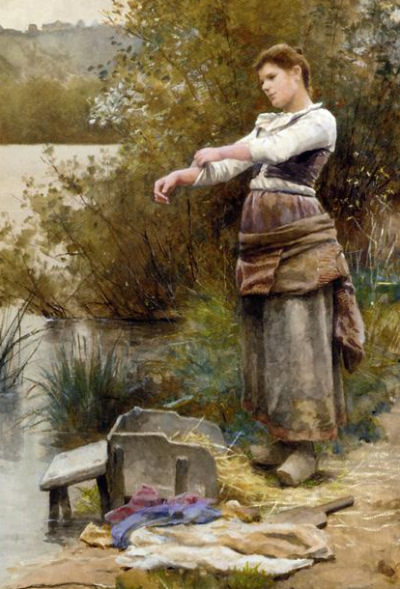
When you have a large family laundry becomes a project. It is not a matter of tossing half the clothing you own in the washer and then taking off for the day. When you have a large family the laundry must flow. Or you face the horde looking at you half dressed wondering where their socks and pants are while you are frantically trying to find one clean shirt while trying to get out the door for an appointment. I have already written about our laundry containment system of multiple hampers. Now, I will get down to the nitty-gritty of washing.
In our laundry system the clothing is already sorted into five main groups: darks, lights, whites, bath towels and kitchen towels (which include aprons, oven-mits, napkins, and shopping bags). Hand washables, delicates and dry-cleaning items are also sorted out. We have enough clothing that there is still some sorting that ideally will take place at this point. Heavy dark clothing is separated from light-weights darks and lint givers from lint collectors go in separate loads.
As the laundry is separated I check for stains again and check pockets and zippers closers. If zippers are closed during the wash they won’t snag other clothing which can damage the zipper or the other item. This also applies to buttons and snaps but is more important with zippers. I remember having a conversation with someone years ago about having to check the pockets before sending things through the wash. Her take was that everyone should take things out of their own pockets (especially husbands), and of course she is correct, but considering we are living in the real world where people forget things like that I check them. I think it is one of those cases where you can be right all you want but reality isn’t going to comply with you just because you are. Sort of like crossing a street at the cross walk, sure the pedestrian has the right of way… but the car is going to hit you pretty hard if you don’t pay attention to it.
A bit on stains:
There are many wonderful stain removal products on the market and some good homemade alternatives. Ohio State University has a wonderful article about laundry, including does and don’t for stain removal.
The most important things to remember when trying to get out stains are:
Before tossing something in the machine I also check to see if there is any quick mending that needs done. Some things will get worse in the wash, loose buttons, fraying rips and will probably need mending before they are washed. Something like a falling hem is more a judgment call they might be worse or not.
Washing:
As I have mentioned we have an energy efficient large capacity front loader. Any large family will do itself a huge service by using the most energy/water efficient machine they can afford. When you are washing three loads a day the cost of electricity and water add up fast.
I am really hooked on my front loader. The clothing seems to come out cleaner, it runs faster and it is gentler than my old top-loader with agitator. The delicate option is actually delicate enough to wash many of my hand wash items. I haven’t been brave enough to trust my underwires to it. A lingerie bag is nice to use in the wash and I have read about special cage like things called “bra balls” that can be used in machine washing your bras, but I haven’t tried one myself. I actually don’t mind handwashing delicate fabrics. Especially when I can use a nice smelling detergent, warm water and let them dry hanging in the bathroom.
If you have never tried it you might want to look into blueing. It really puts the sparkle back into white clothes.
Drying:
Line drying vrs the dryer. Well, hands down line drying wins in theory. It is energy efficient, better for your clothing, and all that is good and right. But drying outside here in Western Oregon is problematic… considering anything hung outside after mid November is likely to be just as wet in mid March. I have limited space indoors to dry, so it is the dryer to the rescue for the winter months. During the summer I have gone through outdoor drying spells, but I need a better line system to make it really work. I am researching the options and will try to get back with something sensible when I nail down the details.
For sweaters and other items that are flat dry I have a drying rack. Actually my drying rack is broken and I am afraid I need to invest in another one. But a folding one that comes out to do its work and then hides neatly away is perfect for our household.
Once clothing is dried I try to make sure it is folded and put away as soon possible. I hate baskets of unfolded clothing getting all wrinkled and making it difficult for me to find the things I need.
I have for a while been considering ironing before things are put away, but have never made the switch. We generally avoid things that need ironed. I am awful at ironing. For some reason I end up ironing more wrinkles in than I get out. I use a spray starch on occasion and love the results.
As you probably know the price of food has been on the rise. The USDA is projecting a 5% possible rise in at home food costs. This is of course hitting at a time where many families are already stretched as far as they can go. So, how do you save money on food.
First off quit eating out. Basic, simple, good for your bottom line and your waistline. Eating out, especially eating fast food, is horrible for your family’s health. Eating out is terrible for you and worse for your children. High in fat, high in sugar, large portions and low nutritional value is the norm in fast food and most restaurant food. All that together means that stopping through the drive-through or calling for pizza should be a rare treat.
Reduce the amount of prepared foodyou purchase. Convenience foods are convenient, but they cost much more per serving and are lower in nutrition than the home-made counterpart. With the possible exceptions of ramon noodles and cheep boxed mac-n-cheese they cost more. But when you start looking at nutritional value added in then the cost is not offset. Things like cookies, crackers, chips, boxed meals, TV dinners, cake mixes are more costly than the made-from scratch versions and are higher in fat, sugar and preservatives.
Control your shopping. Use a list and shop less. If you create a menu and a shopping list you can help avoid “quick” trips to the super markets to pick up “one or two things” that cost your family a bundle in time, gas, and those little impluse purchases that sneak into the cart.
Menu planning is perhapes the single most cost effective measure you can impliment. First it allows you to follow the first four points more easily and second it helps you stay within your budget while you shop. If you know what is on the menu for the rest of the week, have the needed items purchased and in your fridge and pantry, stopping by the local fast food joint is much less of a temptation. Menu planning also allows you to make the most of super market circular sales and coupons. It also allows you to avoid waste. I can’t tell you how often food has gone bad before we ate it. With a menu plan the letuce and peppers in the bottom of the fridge will not be going bad nearly as ofter. Left over nights can be scheduled in and they can be eaten before the left-overs become a bio hazzard.

A good friend of mine wrote me last week to ask about “the homeschooling thing”. Which delighted me to no end as I know their family would be fantastic homeschoolers. I found in answering her questions that I have quite different answers to the questions “Why did you start homeschooling?” and “Why do you homeschool?” both of which I am frequently asked and then there is yet a different answer to the rarely asked question “Do you think homeschooling is better than school?” and the more frequently asked “Are you nuts?”
Why we started homeschooling was pretty straight forward. Our local public elementary school is struggling under the burden of several large and diverse immigrant populations, the omnipresent specter of standardised testing, and the typical ills of city schools. Our parish school, in which our children were enrolled, went through a chaotic period, spiralling down into a toxic atmosphere and ending in a massive tuition hike before the school closed. Homeschooling at that point was a minor desperate reaction to figuring out what to do, but one that we were hopeful would work well for us.
And it has. Why we homeschool now really had nothing to do with why we started. I enjoy homeschooling. The kids enjoy it. Take away the better curriculum, the more engaging material, the spiritually sound environment, the great support of our parish homeschool group, the childrens’ homeschool friends, the one on one attention, take all that away and I still would love homeschooling because I get such a kick out of watching the children learn new things. Why we homeschool now is more a matter of lifestyle. Once we broke out of the box we started learning new things about learning. My husband and I are both self motivated learners. We both read a great deal, try new things, like talking about ideas and concepts and pushing ourselves ever so slightly each day to be more informed and engaged in life and learning. Basically we are autodidacts. So homeschooling fits us because our own experience has been that learning need not be confined to the classroom.
So do I think homeschooling is better than school. Well yes, for us. I can certainly see how others might not have the same type of experience. But good homeschooling would be very difficult for any school to match. First because homeschooling is focused on educating a particular child (or relatively small set of children) to the best of that child’s abilities taking into account that child’s aptitudes and interests. Secondly the nature of schools being political institutions creates a an atmosphere that is not educational in the classical sense. Politically the goals of schools are quite different from the goals of a classical education; schools more train than educate. Even where they educate the education is directed most commonly towards very utilitarian knowledge. This isn’t necessarily a bad thing. In fact as a citizen I certainly want the bulk of my community’s members to be trained in useful skills that create a good work force that provides me with the services I need. But I want my own children to be educated in the sense that they become rational human beings with a deep understanding of their own faith, culture and the natural world. As institutions schools will always be bogged down in administrative overhead that impacts classroom learning but doesn’t affect the family educating their own.
So are we nuts? (this is by far the most common question I am asked about homeschooling) …. Probably. But it is a happy nuts.
Yesterday we took a walk through the yard to investigate the plants that we have growing. We were on the look out for angiosperm, gymnosperm, seedless vascular plants, and non-vascular seedless plants. We took small samples and photo. The children illustrated the samples on pages that will be going into their books. Tomorrow they will work on the narration for the pages. It should all bind up nicely.
Our history is concentrating on Ancient Greece. Christopher is working on a portfolio of various aspects of Greek society and culture. I am using a prepared book to guide us along in this but I am finding that I have to fact check the stupid thing so much I am basically just using it for the illustrations and crafts. It is sort of funny as one little thing caught my eye and caused me to look further.
The book claimed that Spartan woman often married at 15 and received little education. This is patently incorrect women in Sparta had rights that surpassed nearly every other woman in the ancient world. In addition to being educated they also owned outright approximately 40% of the land and controlled most the rest. The same laws that bound Spartan men to the military left the women at the helm of civil society and commerce. They also rarely married in their teens and a woman who died in child birth was given the honor of a tombstone with her name, something reserved for men who died in victorious battle and a few other noble instances. They were barred from war and state government only but so were most men. Only those men who could complete the rigours demands of Spartan military service were given the title citizen.
Of course this leads to a rather sad idea. One of two things happened here. Either the writer and publisher of this book dropped the ball and didn’t fact check and lazily went with some source that was unreliable. OR they knew they were fudging but for some reason like the idea that Sparta women married at 15 and received no education. I think their biases are showing: Education can only happen in a classroom and Woman are victims. Spartan girls did not get trucked off to school with their brothers at the age of seven. Instead they learned at home taught by their families and tutors. This (in the minds of some educational professionals) means they received no real education.
I have often pointed out to my own daughter that in many cultures and times she, at the tender age of 15, would be very seriously looking at becoming or already be a wife in charge of her own home and household. The funny thing is she doesn’t look at this with horror but more a sort of awe that a young woman would be expected to manage servants, home production of clothing and food, maintenance of the property, in some cultures the planting and harvesting of crops, perhaps wine making, olive pressing, carding, spinning, and weaving, and the care and education of her children. I just really don’t get the odd fascination that I find over and over again with the idea that woman were pathetic chattel dominated by oppressive men who wanted to keep them stupid and worthless when history and plain common sense say otherwise.
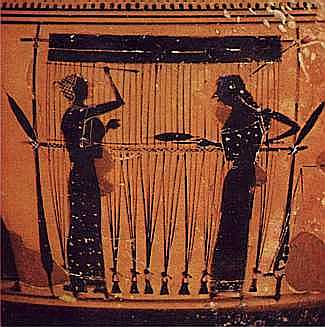
I would much rather my children look through history at the beauty and honor of women. How they have worked their looms, tended their homes and gardens, made good cheese and raised their children. I defiantly don’t want them too look at woman as historical victims. Victims are often worthy of pity, but they usually do not inspire respect.
I stumbled across this story today and I hope everyone can take a moment to pray for this family: Tricia, Nathan and baby Gwyneth. Gwyneth was born at 24 weeks, her mother Tricia has CF and is waiting for a double lung transplant. Tricia is remarkable in deciding to carry her baby she might well have cut her life very short and made it impossible for her to receive the lung transplant she needs.
The kids have started their lessons again today. It has been probably the least productive homeschool day we have had in months. Going back to studies after the Christmas break is always a challenge, but when the sun is peeking through the clouds and we get a late start (thanks to having a phone conference this morning) it is all too easy to say… “Oh well” and put off any serious buckling down until tomorrow.
 Simply Catholic