Food · Homemaking · Mary Mary and Martha

Eating with the seasons

In my menu planning article I mentioned that one of my goals when planning my family meals was to use in season and locally grown food when possible.  The first question I am asked about this is “How do you know what is in season?”.  Portland, Oregon has a Department of Sustainable Development  and part of their mission is to promote Sustainable Food.  If you do a google search for  “in season produce” + “your state” or “your city” you (hopefully) will find something similar.

Some websites you might want to look at (I am not vouching for the content on these sites, but they look interesting and topical,  if you know a good site please shoot me a link):

Local Harvest 
USDA Farmer’s Markets
ATTRA


Homemaking · Mary Mary and Martha · My world

Menu Planning Part 2

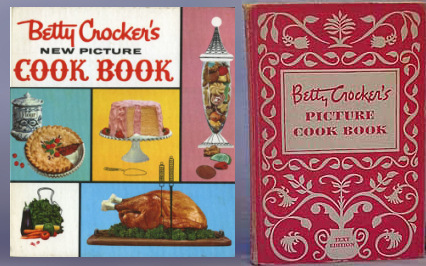
In the early 1960’s my mother sat in a home economics classroom thumbing through her “Betty Crocker New Picture Cookbook” like so many young women her age.  It was the colorful 3rd edition, the reprint of the trusty classic.  She kept that old book, in fact she still owns it.  When I was a girl I used it to learn to make bread and cookies and read through it.  For years I had wondered why housekeeping was so difficult for me and then it dawned on my sometimes thick skull,  I had no idea what I was doing. As I mentioned in my last menu planning article I didn’t learn the skills I needed to have to run a home a my mother’s knee.  I actually had to learn many of the most important things later and on my own which has been rather daunting and something I am still working on.   One thing I did that helped me was to purchase my own “Betty” from e-bay.  I had love my mother’s old edition.  When I left home my mother bought me the 6th edition, which had been sadly gutted to fit the “modern woman’s” needs.  So I eventually bought the older edition for myself. 

It was then that I started to see how much I was really creating extra work for myself simply by running my household so inefficiently.  Menu planning was one of the first things that I set my mind to fixing.  I started by just listing the meals my family likes and randomly fitting them into meals over the course of a few weeks.  This was far better than nothing, but still had a ways to go.  Kyle and I used the South Beach Diet.  Its menu plan covers everything from breakfast to desert and I found this to be even more helpful.  So I carried it farther.  I have used my Betty Crocker cookbook and two nutritional sites to help me develop my new menu plan templates you can read about the process behind that here.  
For my family and our nutritional needs this is the basic outline I use:

·     Vegetables:  at least 5 servings per day
·     Fruit:  2-4 servings per day
·     Whole grains: 4-11 servings per day
·     Legumes: 1-3 servings per day
·     Soy: 2-4 servings per week
·     Oils, nuts, seeds, olives: 3-9 servings a day
·     Dairy: 1-3 servings a day
·     Eggs: 1 per day
·     Fish 2-4 servings per week, with at least 2 being omega-3 rich or having omega-3 in something else
·     meat 1-3 servings per week


That is the goal.  Each day we have three meals and two snacks to fill.

·     Breakfast
·     morning snack
·     lunch
·     tea
·     dinner


So over a week it looks like this :

Sunday

Monday

Tuesday

Wednesday

Thursday

Friday

Saturday

Breakfast Breakfast Breakfast Breakfast Breakfast Breakfast Breakfast
vegetable Fruit vegetable Fruit vegetable Fruit Fruit
oils Dairy  Dairy Dairy Eggs Eggs  Eggs
Dairy Eggs Eggs Eggs Dairy Dairy Dairy
Eggs            
             
             
Morning Snack Morning Snack Morning Snack Morning Snack Morning Snack Morning Snack Morning Snack
Fruit vegetable Fruit vegetable Fruit vegetable vegetable
  Dairy oils Dairy oils Dairy  
             
             
Lunch Lunch Lunch Lunch Lunch Lunch Lunch
vegetable vegetable vegetable vegetable vegetable vegetable vegetable
Fruit Fruit Fruit Fruit Fruit Fruit Fruit
Legumes oils Legumes oils Legumes Legumes oils
oils   oils   oils oils  
             
             
Tea Tea Tea Tea Tea Tea Tea
vegetable vegetable vegetable vegetable vegetable vegetable vegetable
oils Legumes oils   Dairy oils Dairy
Dairy   Dairy        


Dinner Dinner Dinner Dinner Dinner Dinner Dinner
vegetable vegetable vegetable vegetable vegetable vegetable vegetable
Fruit Fruit Fruit Fruit Fruit Fruit Fruit
Oils Legumes meat Legumes Meat Dairy Legumes
Dairy oils oils oils oils oils oils
meat Dairy Dairy Dairy Dairy Fish Dairy
  Fish         Chicken or Fish

Whole grain at every meal, work soy into the menu at least two or three times.

This menu template covers the basics of good nutrition as I see it.  You might disagree or have some other important idea to work in.   But this more about practice than theory.   No matter what theory drives your menu plan at some point the theory has to work in practice.  Pretty much how I got the template was to list out what needed to be served, how many times per day or week then distributed the amounts over the day and week.   Any nutritional plan will lend itself to this method, though some will require more work than others.  

I list out my families favorite dishes and then place them into the menu.  Note that for vegetables the amount is unlimited the daily minimum is 5 serving.  A bean and vegetable soup for lunch with a whole grain roll with olive oil to dip and a piece of fruit will cover a legume, vegetable, whole grain, oil and fruit slot.  With that in mind it is easier to get all those servings in than it might at first seem.  Two vegetable servings can be covered as easily as having salad and steamed broccoli at the meal.  Peanut butter and celery or cauliflower bits with hummus for a snack fill both the slots for the tea-time snack.   I also don’t get overly stressed out about breaking the menu a little bit.  A slice of Canadian bacon at breakfast a couple times a week, a slice of lunch meat to make a veggie-turkey roll-up or even hot-dogs on a Saturday night is not something I worry about.  The menu plan is to serve me and my family with nutrition in mind, not become something rigid and painful.

All that said there is more to eating than vitamins and calories.  The Smart Homemaker of my Betty Crocker cookbook, of course she realizes that good nutrition is the cornerstone happy family meals, but she also knows that it takes more than just the “right” foods.  She stressed that our menus should be Appropriate to our situation, Be appetizing in appearance, be satisfying and that we should be mindful of cost.  To this list I personally add seasonal, local and as sustainable as possible.

Appropriate: Each family is different.  I am home during the day and this allows me to devote more time to meal preparation than some families.  We have a larger family, small children, we homeschool and we live in the city and we don’t have any allergies or food sensitivities.   If any of these things changed our meals might look different.

Menu planning has to also be appropriate to my brain.  For me it doesn’t make sense to reinvent the wheel each week.  I am a thinking junkie, in fact I can over think just about anything as all my friends and anyone who has read this blog can attest to. I like to weigh every possibility and find out all the facts and making a commitment to a decision gets me a little nervous.  Consequently I can burn a lot of time making choices.  Knowing this about myself I realize that every time I can remove deliberation out of the process I am saving myself a lot of time.  Set menu plans are a good thing for me, going through a stack of cookbooks and searching online for new recipes each week is going to take me too much time.  It is much better for me to use set menus.


Appearance:  Betty’s advice is to prepare, serve and present each meal attractively.  Plan ahead so that you serve a variety of colors an textures.  This adds both nutritional value and visual appeal to the meal.   Take the time to eat together, use the good china more frequently, set the table for dinner.   I was listening to a discussion on food several months ago, it may have been Michael Pollen who was speaking about how food has become less satisfying us, and part of the decline in that is how we have made eating so utilitarian.  It requires a certain time commitment to serve  a lovely meal at an attractive table for the whole family, but it is worth it for so many reason.

 Satisfaction:  This section could have been called “prepare with care” and it is closely related to the suggestions of appearance.  Well seasoned, carefully prepared food in variety is more satisfying.  I remember having read the little poem as a girl:

Something soft and something crisp
Should always go together,
And something hot with something cold
No matter what the weather;
Something bland needs the complement
Of something with tang and nip.
Follow these rules and all your meals
Will have taste appeal and zip.

  It really does make sense and isn’t as complicated as it seems, warm bread, a crispy salad and a well seasoned soup makes a perfect meal that follows the above suggestions to the letter.   Macaroni and cheese with peach slices and cooked carrots lacks variety in color and texture.  I served this once and my children, who usually are not the type to protest about any of those menu choices all looked at me sort of funny and complained:  “Everything is orange, mom”  caught off guard I had to come up with a quick reply, “ummm, yes, it is ‘Orange lunch’ today”.  They thought that was cool and happily ate it, but it does illustrate the point:  Even my little ones prefer a little variety of color and texture on the plate.

Wine: I know some people dislike wine or have some sort of objection to it.  We have wine, usually red, several times a week with dinner.  It is inline with most of the healthy eating plans I have seen and both my husband and I enjoy a glass with our evening meal.  It is a highly satisfying touch to the table for us.  As the children reach their teen years they are allowed a bit of their own on occasion and we are comfortable with this.  I have one acquaintance who drinks a small amount of red wine, for health reasons, but only when her children can’t see.  I suspect this sort of secretive behavior sets a worse example than pouring a glass at dinner would, but to each their own.

Technique: Cooking well make preparing your family meal more fun for you and more satisfying for everyone.  If you are new to cooking or haven’t had much success in the kitchen I highly recommend taking the time to learn basic kitchen techniques.  Alton Brown’s “I’m Just Here for the Food” is one of my favorites; there are websites that illustrate basic techniques and possibly even classes through your local college or home extension office.  Don’t be afraid to try something new from time to time.  I try to work one new recipe every two weeks or so.  Food in addition to being prepared to be satisfying can be very satisfying to prepare.

Cost: Food costs have gone up rather sharply lately and there are many places where you can cut family food budget.  Menu planning just by itself will help you save money.  You can plan ahead what to eat, you can stock your pantry when things are on-sale, take advantage of seasonal food, coupons and “loss leader sales”, you can shop at bulk and discount stores and you can basically eat better for less.  You might want to try cooking ahead or freezer cooking in order to save even more.  But the biggest differences for us are cutting out what I call “Oh, crap, dinners”  — those times when it is 5pm and I have no idea what to cook and nothing quick in the house to prepare which results in a last minute trip to the store or drive through.  When I am on top of my menu planning we aren’t making last minute trips to the store (saving time, gas and not purchasing impulse items) and we aren’t resorting to fast food and eating out which are both budget and diet busters.

Appropriateness, appearance, satisfaction, nutrition and cost are Betty Crocker’s list of important menu planning considerations.  But a lot has changed since the 1950s.  We are more aware of the impact our actions as a society have on our health and the environment in which we live. The University of Michigan Integrative Medicine’s Healing Foods Pyramid states that it emphasizes (among other things) “Support of a healthful environment”  the way in which our food is grown, the amount of pesticides, hormones and fertilizers all affect the health-value of our food and health of the land it is grown on.  Supporting local farm families in turn supports our communities economically.  All these things matter when put together.  While I am certainly not militant about being organic or “green” I view these ideas as personal lifestyle choices and I offer them up for consideration.

Seasonal, local and sustainable: Eating food that is in season locally allows you to take advantage of what is available in your farmer’s market and in local u-pick and small farms near you.  You might even be able to grow some of your own vegetables and seasoning.  Herbs are especially easy to go and require no more space then a window box or small platter; salad greens, radishes, green onions require very little more and tomatoes will happily grow in a large patio pot.   Learning to freeze, can, dry and/or pickle is a great way to save money, support local your local economy and avoid pesticides and other unwanted chemicals.   You might even be lucky enough to be able to purchase eggs, meat and dairy from small operations.   A side of beef in the freezer can provide meat for a year.  For items beyond your local market keep an eye open for fair-trade options to help ensure that more of the profit goes to those who actually produce the product.  Consider researching the possibilities available to you, you might find yourself happily surprised at the variety and quality. 

On a seriously Catholic note, you might also, when possible try top purchase from religious orders. The Anchoress has been raving about her sponsor “Mystic Monk Coffee“.   Many orders have some sort of food items they sell.  Hopefully I will be able to work up a list soon.  If you know of one please send me a link.

I will be continuing this series.  Next in the works is an article on Pantry and Shopping Lists and I will start posting completed menus later next week. 

 

40 bags of stuff. · Homemaking · Mary Mary and Martha · My world

40 Trash bag Challenge


So far I have managed to get about 17 bags of stuff out of my house for good.  Most of this is old clothing and sheets.  In part because I haven’t even gotten out of the bedroom closet area.  Today I am heading into the bathroom and then on to the girl’s room. 

I was about to write that I hadn’t learned anything insightful so far, but that isn’t true.  When Kyle and I were going through the closet (I didn’t want to toss anything of his without his input) one thing we both noticed was how ofter we said “Wow, I forgot I owned that”.  We have some items that we more or less store in our closet and somehow things we like had dissapperead behind things we didn’t and before long they were completly forgotten.  So, the lesson I take from this is pretty straight forward.  Don’t store things you rarely use with things you use all the time.  Seperate them in some way.  Put them in a storage bag or box, move them to a storage area in your home, but sperate them in some way.  This lesson was reiterated with the linen closet.  Things had more or less been put back in a rather haphazard manner and so it was difficult to find sets, pillow cases had taken to hidding in the oddest places and a good portion of this problem was simply that there were too many items not regularaly used mixed in with the items I need every week.

Blogs I Know · Homemaking · Mary Mary and Martha · Simply Lovely Fairs

Simply Lovely Windows

This week the Simply Lovely Fairs are featuring Simply Lovely Windows.  You can find links to many other articles about this topic at Paula’s Blog.


I dwell in Possibility–
A fairer House than Prose–
More numerous of Windows–
Superior–for Doors–

Of Chambers as the Cedars–
Impregnate of Eye–
And for an Everlasting Roof
The Gambrels of the Sky–

Of Visitors–the fairest
For Occupation–This–
The spreading wide my narrow Hands
To gather Paradise–

Emily Dickinson

I attended a conference for Catholic Women several years ago where there was a speaker who’s talk was about decorating a Catholic home. There were two things that I walked away with that have stuck with me ever since. The first was the question “would a visitor to your home know you are Catholic just by looking around?” and the second thought was something more vague about your kitchen sink and window being an altar.

I have to admit that my “modern woman ears” hear the words “kitchen sink” and “altar” in the same sentence and the feminists alarm bells start sounding. There is something oppressively patriarchal about the idea that your sink is some sort of altar isn’t there? How could doing the dishes have anything to do with religion unless it was in some sort of “keeping women barefoot and pregnant and in the kitchen”? But then I come to my senses and realize that I really, really like that idea, mostly because I have seen it implemented so well.

My friend Michelle is a wonderful Irish-Catholic woman, mother to nine children with her first grandchild on the way. She is beautiful, a mix of wit and moxie, full of love and joy. Her kitchen window was the first time I have seen an “altar” window. Though I don’t think she would call it that. In fact she called it something like “the whole solar system in my kitchen window”  she would declare this while gesticulating expressively then go on to explain the amazing array of sun catchers and glass beads strung across the window, each one catching the light and in its own way special and little items on the sill each one with some tale.  All the planets were there each one sparkling.  Her children could tell you about them too. It had become a family story something that unified them, educational in a way and entertaining. But it was more. All creation lived in my friend’s noisy happy home. There was joy hidden in the corners and sorrows swept under the carpets and it was all there all the time. The solar system in the window was just one typical little thing. It was something that sprung organically from Michelle’s brain that became something fantastic. It served the same purpose as all our Church’s stain-glassed windows do: it beautifully illustrated Gods creation and made a tiny little kitchen into something whimsical and lovely.

When they moved and had to sell the house one of the things their realtor had told them was that the solar system had to come down. Apparently people looking to buy houses are not as interested in one if it has an eclectic collection of glass and string hanging in the window. It had too much character, was too eccentric, not really normal. Life in Michelle’s house wasn’t typical. Like so many things that God puts His hand into, it was something splendid, but certainly not marketable, and definitely not for everyone.

It takes a certain amount of insanity to be a person of faith to start with. While faith is the most logical reaction to a supernatural experience, I suspect many people are very afraid of God fearing either he is real or he is not, and deeply uncomfortable with either option. So for safety they pull the curtains shut and lock the shutters least the tiniest bit of unexpected supernatural joy slip in. I fear that many more simply feel it is best not to think about it all too much and turn on the TV and close the curtain to prevent glare on the screen. To be alive in faith is to fling the windows full open and let the sun come in and maybe even be like Pollyanna and string a few prisms across the window just for the added rainbows.

So many of my daily tasks center around the kitchen sink, all the cooking and cleaning that can become such drudgery if it is not done with a well motivated heart is often centered around the sink. Making this area lovely, having it reflect our faith to help bring our reflections back to God is a very sensible step in helping stay focused on not just doing the daily, needed tasks of living but living our vocation through those daily tasks. And that is the genius of the kitchen-window as an altar.


Homemaking · Mary Mary and Martha · My world · Uncategorized

Menu planning

One of my old stand-bys is my 1950, Betty Crocker Cookbook, 1st edition.  (Now, I know that Betty Crocker wasn’t a real person.. but I still find a bit of humor in thinking of the cookbook as “Betty” — my grandmother is another Betty so maybe this adds to the charm, but either way I hope you can bare my bit of madness here as I refer to her as a real person.) My tattered red friend is not the reprint, but the original with all its sexist little comments and admonitions on being an active and productive homemaker.   It is filled with good advice about work habits, entertaining, recipe short-cuts, meal planning and nutrition.  

One thing I find most useful is this book assumes nothing.  It starts from the idea that the reader is a complete homemaking ingenue and goes from there.   So it actually covers things that one would have assumed that a young woman growing up in the 30s and 40s would probably know.  Betty Crocker advises that the homemaker plan menus at least one week at a time and better to do two weeks or even a month at once, to shop only once or twice a week.  The second shopping trip should be for perishables.   She suggests keeping a “well stocked emergency shelf”  to deal with those unexpected guests or inordinately hectic days where the lady of the house is too busy for shopping and cooking.  All sensible and good advice and I think that the starting point is spot on,  nutrition.

Now, Betty Crocker, 1950, is a little behind on the scientific discoveries of today.  But, Betty and her counterparts knew full well that little Judy and Johny needed nutritionally balanced meals so they could grow up and become useful and happy adults.  In the 1950’s cookbook there is no fudging on who is responsible for seeing that happens. Mom is the “go-to” person for healthy meals, clean and tastefully decorated homes and family entertainment.  The world has changed a great deal.  The young homemaker of 1950 was held to a somewhat different set of standards but, she also wasn’t facing some of the same temptations and bad habits that we face.  In the chapter on short-cuts she mentions that in larger cities there are places where you can pick up whole meals and take them home as a modern marvel, almost experimental in their novelty.   It was 5 years before Ray Kroc would open his first McDonald’s, packaged food was almost non-existent,  the first Swanson TV dinner wouldn’t hit the store shelf for four more years.  So, while the details of what was then considered a healthy meal are dated, the principles and the application of planning and preparing are, if anything, even more relevant to today than when they were written. 

Betty Crocker quotes the “Smart Homemaker” saying, “My meals are more nutritious since I’ve been planning them ahead.  I check in advance the basic foods and the daily needs of my family.”   To get a good idea of what those basic needs are I use the Harvard Healthy Eating Pyramid.  It took more tweaking than I would have liked to figure out how to translate the pyramid into meals.  For some reason the geniuses at Harvard figured that spelling things out in “servings” wasn’t how people really eat.  To help out on this and to get a bit of a different angle I also looked at The UMIM Healing Foods Pyramid  which actually turned out to be more practical.  I finally got it worked out and could create a template for menus.  The raw template has “slots” for menu items that I can drop items from the different categories into to create meals.   

 I know there are many different food plans out there, with different claims to what is the most healthy way to eat.  And really, I am not going to sort that out or make any judgement for anyone else on that. Find what works for you according to your family’s tastes, your beliefs and culture and what makes sense to you.  What makes sense to me the two pyramids married with the idea of local and seasonal food and sustainable agricultural practices.   In practice we use too much red meat, I am not giving up my coffee and there are those Goldfish crackers. 

One thing that has surprised me is how much effort it really took to get to this point.  My grandmother learned menu planning in her home and while working as a cook for a ranch.  My mother has often told me how little she learned at home, her mother apparently shewed her out of the kitchen more often than not but mom did have a home economics class in high school.  My mother did the homemaker thing when I was very young then entered the work-force, never to look back and swore she wouldn’t be some 1950s housewife who’s greatest achievement was having the cleanest toilet on the block and by the time I made it to high school home economics was optional and sort of looked down on.  I came to adulthood ill-equipped to manage a family menu, much less a household and I have had to basically teach myself.  

My next menu planning article will break down into a little more detail about how you get from theory to shopping list.


Blogs I Know · Caritas · Mary Mary and Martha

Entrusting his heart to her.

10 When one finds a worthy wife, her value is far beyond pearls.
11 Her husband, entrusting his heart to her, has an unfailing prize.
12 She brings him good, and not evil, all the days of her life.
Proverb 31
A few days ago I read on Dr Helen about an article written by Leslie Bennetts on MSNBC entitled “Chores for two: Why men don’t pitch in“.   The Anchoress also picked it up here and her insights are well worth reading.  About a week ago I wrote on the subject of housekeeping, and the idea of a good wife.  What I said there applies as I reflect on this newer article.  In the Good wife post I quoted Minette Marrin’s article about keeping marriages healthy, how that might reasonably mean one spouse (usually the wife) putting their career ambitions on hold and wives going back to the idea of picking up, putting out and building up their husbands.  While what Ms Bennetts says is not all that different from what Ms Marrin says in application, the difference in attitude is astounding.   Marrin’s idea of a good wife is someone who puts her husband’s and her children’s needs (both material and emotional) above her career ambitions out of love; Ms Bennetts connives to get her husband to “pitch in” more by figuratively castrating him and “insisting” that he do more around the house because that is what she feels is her due

I find it sad in Ms Bennetts article where she says what she really thinks about her husband.  I couldn’t do it justice so I will give you a long quote:

And yet everyone acts as if Jeremy deserves some kind of medal just for making a run to the supermarket. No one has ever suggested that I’m a heroine for doing the things every mother is expected to do. I admit that my husband helps out more than many men, but here’s another news flash: It isn’t because he’s such a fabulously enlightened being. Left to his own devices, he would doubtless park himself in front of the TV like some sitcom male-chauvinist couch potato while I did all the work. The reason Jeremy “helps” as much as he does (an offensive terminology that itself suggests who’s really being held responsible) is simple: He doesn’t have a choice.

 From the beginning of our relationship, I made it very clear that I wasn’t going to be any husband’s unpaid servant. If Jeremy wanted to be—and stay—married to me, let alone have kids, he couldn’t stick me with all the boring, mundane stuff nobody wants to do. We were going to share the work, or we were going to forget the whole deal.Unlike my first husband, who announced after our wedding that he didn’t like the way the French laundry did his shirts and he now expected me, the Wife, to wash and iron all of them, Jeremy recognized both the righteousness of the principle involved and the intransigence of the woman he’d married, and proceeded to pitch in.

I will let the reader draw their own conclusions here, but I find it sad that Leslie Bennetts decided that her husband, the father of her children, the person she shares a life and presumably a bed with, the one person in the whole world who’s opinion of her should matter most deserves to be publicly exposed like this.  He doesn’t help out because he loves her, because he is a great guy, no no… he helps out because she has found a way to whip him into it.  And now the whole world know the truth.  So much for “entrusting his heart to her.” 

I rather like Aristotle’s  “On a Good Wife“. 

Therefore not only when her husband is in prosperity and good report must she be in agreement with him, and to render him the service he wills, but also in times of adversity. If, through sickness or fault of judgement, his good fortune fails, then must she show her quality, encouraging him ever with words of cheer and yielding him obedience in all fitting ways—only let her do nothing base or unworthy. Let her refrain from all complaint, nor charge him with the wrong, but rather attribute everything of this kind to sickness or ignorance or accidental errors.

Now of course the whole work is hopelessly sexist and all that but the above passage if rendered to fit more with today’s norms has a bit of really good advice.  It is easy to be kind and loving to your husband when everything is good, when the world looks at him and smiles, when he is successful and healthy.   But sometimes men fail.  They loose their jobs, they have problems, they fall ill.  Then is when the marriage vows become a buttress against the world.  When he has tripped and needs a hand, when the world has crushed him down that is when the good wife’s character shows.  When she hides his shame from the world, when she builds him up instead of tearing him down, when she never speaks ill of him, she becomes his best friend, his help and his joy.  That is when his heart can trust in her. 

I have often found it distressing how many  women come online and drag their husbands through the dirt.  How often they complain about the minor little things he does.  How they whine about the things he doesn’t do.  Now maybe they are all sweetness and light to their husbands in real life, but I can’t imagine how heartsick these husbands would feel if they read what their wives say about them.   But it isn’t just that women do this to their husbands they encourage it.  It become at times a sisterly hobby of sharing all the dirt on their husbands.  

My own good husband would be crushed if I said half the things about him I have seen other rattle off as though they were talking about what was for dinner or how to prune roses.   It all goes back to love and motivation.  When you love someone you don’t want the world to see their faults.  People frequently tell me how great Kyle is because he does something or another.  If the neighbor told me how great he was for going shopping the last thing I would think is “nahhhh, he only does it because I bribe him or whip him into it, I am the great one.”  I wouldn’t even think “Well how come you don’t think I am great when I do all the shopping most weeks?”   When someone says something about what a great guy my husband is I think “Yeah!  He is a great guy.”  Because he is.  He doesn’t do it all, he isn’t perfect, but gosh darn it he tries and that means so much.

I can not imagine being Leslie Bennetts husband.  With the insulting things she has written about him I wouldn’t at all be surprised if he decided her over-entitled-ego was too much and left to find someone who wouldn’t verbally upbraid him for the entertainment of the world.  I will hold out the same hope for them that I did with Corinne Maier and her children.  I hope he was in on this all along. Maybe he has a strong enough ego and is secure enough in her affection to see this article out there and be fine with it.   Maybe she is hopeful that this will build up sales for her book and he encouraged the whole thing.   They will open the big royalties check together and laugh at the world as we all get up in arms about what a harpy she is.  She will look at him while they are getting ready for bed tonight and she will smile and tell him he is the best guy in the world and he will know she means it.  I feel very sorry for him if that is not the case.

Catholic Homeschooling · Mary Mary and Martha · My world

Washing

When you have a large family laundry becomes a project.  It is not a matter of tossing half the clothing you own in the washer and then taking off for the day.  When you have a large family the laundry must flow.  Or you face the horde looking at you half dressed wondering where their socks and pants are while you are frantically trying to find one clean shirt while trying to get out the door for an appointment. I have already written about our laundry containment system of multiple hampers.   Now, I will get down to the nitty-gritty of washing. 


In our laundry system the clothing is already sorted into five main groups: darks, lights, whites, bath towels and kitchen towels (which include aprons, oven-mits, napkins, and shopping bags).  Hand washables, delicates and dry-cleaning items are also sorted out.   We have enough clothing that there is still some sorting that ideally will take place at this point.  Heavy dark clothing is separated from light-weights darks and lint givers from lint collectors go in separate loads.


As the laundry is separated I check for stains again and check pockets and zippers closers.  If zippers are closed during the wash they won’t snag other clothing which can damage the zipper or the other item.  This also applies to buttons and snaps but is more important with zippers.  I remember having a conversation with someone years ago about having to check the pockets before sending things through the wash. Her take was that everyone should take things out of their own pockets (especially husbands), and of course she is correct, but considering we are living in the real world where people forget things like that I check them.  I think it is one of those cases where you can be right all you want but reality isn’t going to comply with you just because you are.  Sort of like crossing a street at the cross walk, sure the pedestrian has the right of way… but the car is going to hit you pretty hard if you don’t pay attention to it.


A bit on stains:


There are many wonderful stain removal products on the market and some good homemade alternatives.  Ohio State University has a wonderful article about laundry, including does and don’t for stain removal. 


The most important things to remember when trying to get out stains are:

  1. Timeliness – Almost all stains respond better to quick treatment and may even become impossible to get out if allowed to set
  2. Don’t get creative – most stains have well known removal techniques.
  3. Follow the directions – Both the washing directions on the garment and the product.  This includes spot testing, soaking time, water temperature, et al.
  4. Start with the least extreme option and go from there.


Before tossing something in the machine I also check to see if there is any quick mending that needs done.  Some things will get worse in the wash, loose buttons, fraying rips and will probably need mending before they are washed.  Something like a falling hem is more a judgment call they might be worse or not.


Washing:

As I have mentioned we have an energy efficient large capacity front loader.   Any large family will do itself a huge service by using the most energy/water efficient machine they can afford.  When you are washing three loads a day the cost of electricity and water add up fast. 


I am really hooked on my front loader.  The clothing seems to come out cleaner, it runs faster and it is gentler than my old top-loader with agitator.  The delicate option is actually delicate enough to wash many of my hand wash items.  I haven’t been brave enough to trust my underwires to it.   A lingerie bag is nice to use in the wash and I have read about special cage like things called “bra balls” that can be used in machine washing your bras, but I haven’t tried one myself.  I actually don’t mind handwashing delicate fabrics.  Especially when I can use a nice smelling detergent, warm water and let them dry hanging in the bathroom. 


If you have never tried it you might want to look into blueing.  It really puts the sparkle back into white clothes. 


Drying: 

Line drying vrs the dryer.  Well, hands down line drying wins in theory.  It is energy efficient, better for your clothing, and all that is good and right.  But drying outside here in Western Oregon is problematic… considering anything hung outside after mid November is likely to be just as wet in mid March.    I have limited space indoors to dry, so it is the dryer to the rescue for the winter months.  During the summer I have gone through outdoor drying spells, but I need a better line system to make it really work.  I am researching the options and will try to get back with something sensible when I nail down the details.


For sweaters and other items that are flat dry I have a drying rack.  Actually my drying rack is broken and I am afraid I need to invest in another one.   But a folding one that comes out to do its work and then hides neatly away is perfect for our household.


Once clothing is dried I try to make sure it is folded and put away as soon possible.  I hate baskets of unfolded clothing getting all wrinkled and making it difficult for me to find the things I need.


I have for a while been considering ironing before things are put away, but have never made the switch.  We generally avoid things that need ironed.  I am awful at ironing.  For some reason I end up ironing more wrinkles in than I get out.  I use a spray starch on occasion and love the results.


Catholic Homeschooling · Mary Mary and Martha · My world

Saving money on food: the super basics

As you probably know the price of food has been on the rise.   The USDA is projecting a 5% possible rise in at home food costs.  This is of course hitting at a time where many families are already stretched as far as they can go.   So, how do you save money on food.

First off quit eating out.  Basic, simple, good for your bottom line and your waistline.  Eating out, especially eating fast food, is horrible for your family’s health.  Eating out is terrible for you and worse for your children.  High in fat, high in sugar, large portions and low nutritional value is the norm in fast food and most restaurant food.  All that together means that stopping through the drive-through or calling for pizza should be a rare treat.

Reduce the amount of prepared foodyou purchase.  Convenience foods are convenient, but they cost much more per serving and are lower in nutrition than the home-made counterpart.  With the possible exceptions of ramon noodles and cheep boxed mac-n-cheese they cost more.  But when you start looking at nutritional value added in then the cost is not offset.  Things like cookies, crackers, chips, boxed meals, TV dinners, cake mixes are more costly than the made-from scratch versions and are higher in fat, sugar and preservatives.

Control your shopping.  Use a list and shop less.  If you create a menu and a shopping list you can help avoid “quick” trips to the super markets to pick up “one or two things” that cost your family a bundle in time, gas, and those little impluse purchases that sneak into the cart.

Menu planning  is perhapes the single most cost effective measure you can impliment.  First it allows you to follow the first four points more easily and second it helps you stay within your budget while you shop.  If you know what is on the menu for the rest of the week, have the needed items purchased and in your fridge and pantry, stopping by the local fast food joint is much less of a temptation.  Menu planning also allows you to make the most of super market circular sales and coupons.  It also allows you to avoid waste.  I can’t tell you how often food has gone bad before we ate it.  With a menu plan the letuce and peppers in the bottom of the fridge will not be going bad nearly as ofter.  Left over nights can be scheduled in and they can be eaten before the left-overs become a bio hazzard.

Mary Mary and Martha · My world · Simplicity

Laundry – the system

I mentioned in my first article, briefly, about laundry systems.  Today I plan to expand on that a bit more.    The USDA survey on the cost of raising a child estimated that parents spend roughly $575 per child per year on clothing.  As with most things of this nature I look at that number and think, “Wow, that seems a bit high.”  But if I was buying everything for the children new, and including foot wear that seems a possible number.   No matter how you look at it clothing is an expense.  Caring for you clothing to keep it looking nicer longer makes sense on every level.   When you have a large family having a system is imperative.  I can think of nothing more frustrating that trying to get three, four or five children out the door while looking of missing socks, the favorite sweater, or the ballet tights that are hiding somewhere in the house only to be discovered under the bed and very dirty.

A long time ago I read about space planning and functionality.    It might even have been in college, but be that as it may, a large family either plans its space for functionality, luck out and creates systems naturally or it fights the chaos that lack of planning creates.  Laundry is no exception.

I view the laundry process as starting when the clothing is taken off.    Clothing coming off a person falls into about 5 categories: it is going to be worn again before it is laundered, it is going into the regular wash, it needs to be hand wash or dry cleaned, it is stained and needs treated, it is exceptionally dirty.  This is the break down of the decision point of the laundry system:

It is going to be worn again: Jackets, coats, “church clothes”, basically anything lightly worn that doesn’t need laundered gets a quick look over for any missed spots and then gets hung up and put away.

It is going into the regular wash: This is the bulk of our clothing.  These cloths go into the hamper in the room they are taken off in.  When I have fewer children (my mom’s system) the laundry was take to a central  hamper in the laundry room.  Or it got left on the floor of the bedroom or bathroom.  This can work for bigger families, but I have found it easier to have hampers in dressing areas so that young children can drop their laundry into it themselves without having to leave the room.

It needs to be hand wash or dry cleaned: These items are mostly mine to start with, they have their own small hamper in the closet in my room.  When the children are wearing something special that needs hand washed or dry cleaned I will make sure that it gets separated.

It is stained and needs treated:  The best time to catch a stain is when it happens, the next best is when it is taken off.  If something has a stain my goal is to nab it right after it is taken off, take it to the laundry room, treat it with the appropriate stain remover and sort it for washing.  Sometimes I miss this and don’t catch it until it is gone into the wash.

It is exceptionally dirty: Every mother is experienced with this one.  I cringe to remember nights where one or more child was ill and vomit covered laundry dominated my life for the day, toilet training accidents,  “Mommy we were playing farm and I got to be the PIG!” – mud covered things can not go into the wash right off.  These items don’t even get sorted.  They just get dealt with.  Sometimes a bucket soak or sink rinse is called for, other times the soak cycle on the washer is needed.  On rare occasions I have looked at something and said, “this is not worth it, I would pay the cost to replace this item rather than wash it”, and out it goes.

Step Two:

Once items make it to the laundry room they are sorted into five baskets.  There is a small basket of kitchen laundry,  the laundry room is right next to the kitchen and I dislike having the dish clothes and such in with the other laundry.  There are also four tall hamper baskets that clothing is sorted into as it comes into the laundry room.  Darks, bath towels, lights and whites (bleach-able) clothing each have their own basket.  Things that need to go through the delicate cycle go into a small basket on the top of the dryer.  In part this system developed because no one hamper was quite big enough for the job and in part because of the system I used while living in an apartment building.  Presorting the laundry makes life that much easier for me.  

While the laundry is being sorted it is given a quick check to make sure there are no missed stains, rips that would be made worse in the wash.  Pockets are checked, zippers zipped, everything is turned right side out or inside out depending on the washing instructions.   One of the nice side effects to the multi-basket system is that it is very easy to see when we are falling behind on the laundry or on a certain aspect (bath towels is the winner here).  It is also a good reality check for the clothing glut issue.  If I can’t sort all the clothing into these baskets then we have accumulated too much.

When a load is ready to be started we pull it out from the hampers.  I try to check again for stains, open closures, turned pant legs, folded socks and the like.  You might have noticed that I have a lot of redundant checking in the system.  This is an example of “the plan” vrs. “the reality”.  In the plan everyone cleans out their pockets, turns out their clothing and let’s me know if there is a stain.  In reality, pens are stuck in pockets of jeans with underwear and socks tangled in the inside out pant legs and since I may not be the one checking for these things in one particular step it make sense for me to check on all the steps rather than deal with the mess afterwards.

 coming soon… Washing, drying, ironing and all that sort of thing

Blogs I Know · Mary Mary and Martha · Simplicity

Simply Lovely Laundry

Six children and two adults make for a bit of laundry each week.  Large family logistics seems to be a topic of interest to the general population.  “How do you do it?”, is one of those very frequently asked questions.  For the most part running a family of eight isn’t that much different than running the more common four person household — the scale isn’t so different as to make that much difference.  But in laundry you can feel the difference.

For many years I have really compounded my laundry problems by simply having too many clothes.  My mother-in-law made the observation when she was watching the children while I was having Josh and I actually did take the advice to heart.  We just have too much in the way of clothing and linens.  At some point after my mother-in-law made her pointed and on point observation I started seriously trying to assess the laundry problem.   The basic situation is frustrating, broken and ridiculously time consuming.  Too many clothes means more time collecting, sorting, washing, drying, ironing (or not), folding, storing  and trying to find the one thing you need when you need it.   It also means the laundry system is more prone catastrophic failure due to the slightest disruption.  One damp washcloth in the wrong basket can lead to a not so nice discovery three days later in the middle of the summer.  So something seriously has to be done.

Pegging the Problem 

I realised that while I was growing up my mother had a system for doing the laundry that I had more or less followed and the problem wasn’t really the washing as much as the management.   She was washing for four people and I am washing for seven usually and that breaks her system.   My bottle neck is one of volume.   Basically for our family laundry problem beings in the closet and dresser, maybe even the store and certainly in those very kindly and very appreciated boxes and bags of donated clothing from friends and family.

The reality is that I have a problem with my laundry and then I also have a problem with the children’s laundry and they aren’t exactly the same problem.

Once upon a time I was a clothes horse.  I love buying clothing, sewing clothing, wearing clothing and I could always find an excuse to spend a little extra on good construction and fine fabrics.  In fact some of my clothing from 10 years before would  still in good shape.  Not because it has been in storage, but because it was quality to start with.   I would meticulously care for my nicer things, my silky under things were always hand washed, the dry cleaner was on a first name basis with my skirts if not myself and (despite being a natural slob) I took care of those items because I valued them.

Somewhere between having children and staying home that stopped.  I am not completely sure why, but I haven’t really thought about it before today and it makes me sort of sad in a way.  It feels sort of like I have given up on that part of myself and I am somehow discomforted by that realisation.

One of the first things I realised that my “fussy” stuff never got washed once I had child number four.   When I was working fussy stuff got dropped off at the dry cleaner, but after a bit of time home I realised that my “dry-clean only” bag was actually a dry-cleaned-never bag and out it went.  But then the few hand washed things started getting washed less and less too.  They just hung around not getting washed.  Little stockings and delicate slips sat accusingly silent on the dryer each time I walked into the laundry room wondering why I had given up on them.  Oh, I had my reasons, I was too tired, too out of shape, pregnant, nursing, taking care of a small baby who would likely puke on me approximately 54 seconds after I put on something special… so why bother?  Socks became a much higher priority.

Maybe since my youngest is two I am starting to think it would be pleasant to wear something other than t-shirts and whatever pants fit this week, or over sized sundresses that hung off my shoulders somewhat resembling a tent.  I don’t know but this is an idea I will have to play around with a bit more.  It is sufficient to say that, for the moment, my clothing needs some serious rethinking but this evening won’t be the time to do it.  It would be nice to be at the point where my clothing is practical for my situation and station in life, but still pleasant and beautiful.  I know how to work this problem, this I can tackle, but it will require some inventorying and planning.

Which is basically how I started working on the far larger problem of the children’s clothing.  Once I realised that the volume of clothing we own surpasses what we need or can even deal with I had to find a way to cut down.  So, being the geek I am, I started researching wardrobe planning for children on the internet.   I found some good basic information on wardrobe planning, it reminded me and reinforced what I had learned in my clothing design coarse in highschool, but these weren’t what I really needed.  I stumbled on a document that was a clothing list for children of various ages in foster care and then that got me thinking and I spent a little time researching the recommended clothing lists for a few boarding schools.  This was mostly to give me an idea of what was sensible for a child to own.  Not that I couldn’t come up with it on my own, but looking at what these various institutions recommended gave me a better and more realistic starting point for my own children’s clothing lists which I eventually made out, put into a neat little spread sheet and then went to work de-cluttering the children’s clothing. 

The List

What does the typical child really need in the way of clothing?  I must admit I really liked the basic, straightforward, practical and simple list of the boarding schools.  They acknowledged, some through centuries of use, that children have lives that require a variety of clothing.  Church and parties, shopping and museum trips, athletics, art, nature hikes and just lounging around.  But they also are places where space for storage is either at a premium or essentially non existent so having too much stuff isn’t an option for anyone.   So the list of what is allowed is basically limited to what is actually needed.  A few were even specific enough to say that extra clothing would be sent home… they mean business apparently, but I doubt any of their charges didn’t have appropriate clothing for everyday and every activity. 

So taking these lists I sat down in front of my spread sheet and thought about what my children do and what they need.  We don’t have a uniform per say,  but it wouldn’t be hard to say that one shirt = one uniform shirt and a study pair of jeans or slacks serves for uniform slacks.  Jumpers and turtle neck sweaters take the place of uniform jumpers and uniform turtle necks and a homey sweater serves for a school uniform sweater quite nicely.  Add in ballet leotards,  swim suits, and dump the school blazer off the list and before long I was looking at something manageable.  For the babies and toddlers I planed on five days of normal wear, a couple extra pair of sleep wear and pretty much followed the same plan.

I got to the end of this, looked at the list a felt a wee bit overwhelmed.   It seemed like a lot of stuff.  Ten ones-ies for a baby, four short sleeve shirts, 4 long sleeve shirts and so forth.  But when I got down the the actual going through the clothing I was shocked.  Even being generous and letting an extra t-shirt or two in I was basically halving the clothing the children owned for most things and in some cases I was getting rid of a lot more.   Then there were a few things that we didn’t have.  Christopher had way too many socks, Josh not enough, this was something I knew but hadn’t taken the time to really sort out because I was too busy digging through a ton of unmatched socks trying to find something close to what I needed.  

But dumping so much of the extra made it possible not to just fit everything in the drawers, but to also store the off season things sensibly.  When I got one of those sweet people in my life handing down clothing I made myself get rid of something old… and this lasted for a long while then I ended up getting about eight bags and boxes of things within about a month.  The structure couldn’t hold up so now I am going through things again and getting us down to the essentials.

On to the laundry room

The system I use for the actual laundry is wonderful for us.  It works, it’s simple, it makes sense.  First off we invested in the most energy efficient and high capacity washer and dryer we could afford.  Not a matching set,  because we found that often one item of a set was rated far higher than they other, so they don’t match but after doing the research on the models available to us and within our budget we ended up with what we have.  When we bought our first energy efficient washer I noticed a real drop in our electric bill.  I think it paid for itself in less than two years. 

We have five baskets.  Four tall ones and one small one.  The tall baskets sort the laundry into whites, light colors, heavy/dark colors and towels.  The small basket holds the kitchen towels.  This makes it easy to keep the loads sorted and to see what needs washed “right now”.   Even the little kids can handle this sort of sorting system.

 More on my laundry system